February 2026
37 new APIs in February
37 new APIs in February
- Attention
- Cal.com (OAuth)
- Candis
- CloudTalk
- Cloudflare
- ConnectWise RMM
- Domo
- Fiber AI
- FullEnrich
- Granola
- Granola (MCP)
- Glyphic
- Gamma
- Google BigQuery
- Google Forms
- HeyGen
- HubSpot (MCP)
- Mercury
- Microsoft Teams Bot
- Microsoft Planner
- Maximizer (Cloud)
- Maximizer (On-Premise)
- NinjaOne RMM (OAuth2)
- Nyne AI
- Okta (Client Credentials)
- Ordinal
- Printful
- ResearchDesk
- Resend
- Salesforce (JWT)
- Salesmsg (PAT)
- Salesmsg (OAuth2)
- Sellercloud
- Tally
- Timify
- UKG Pro HCM (Client Credentials)
- Upsales
Sync checkpoints
We introduced customizable Sync checkpoints to make syncs interruptible and resumable.Previously, a failed sync would restart from the beginning of its execution cycle, potentially wasting time processing data that had already been synced. You can now set acheckpoint field with a custom comparison object and use nango.getCheckpoint() and nango.saveCheckpoint() directly in your function code to track progress at a granular level.nango.lastSyncDate. We also removed the concepts of incremental vs. full syncs from the function signature. Follow the Migration guide to move to Sync checkpoints.Serverless runtime for execution
We overhauled the underlying execution infrastructure to be fully serverless.Function executions now run in isolated AWS Lambda environments rather than using a single VM per customer. This provides dedicated resources and an isolated runtime for every Function execution, significantly improving tenant isolation, execution fairness, reliability, and performance scaling.This change is at the infrastructure level; your function code and APIs are unaffected.AI integration builder skill
We released a new AI skill for writing and testing Nango Actions & Syncs using your favorite AI coding agent.The builder is compatible with over 18 different AI frameworks, including Claude Code, Cursor, GitHub Copilot, Gemini CLI, Codex, OpenCode, and more.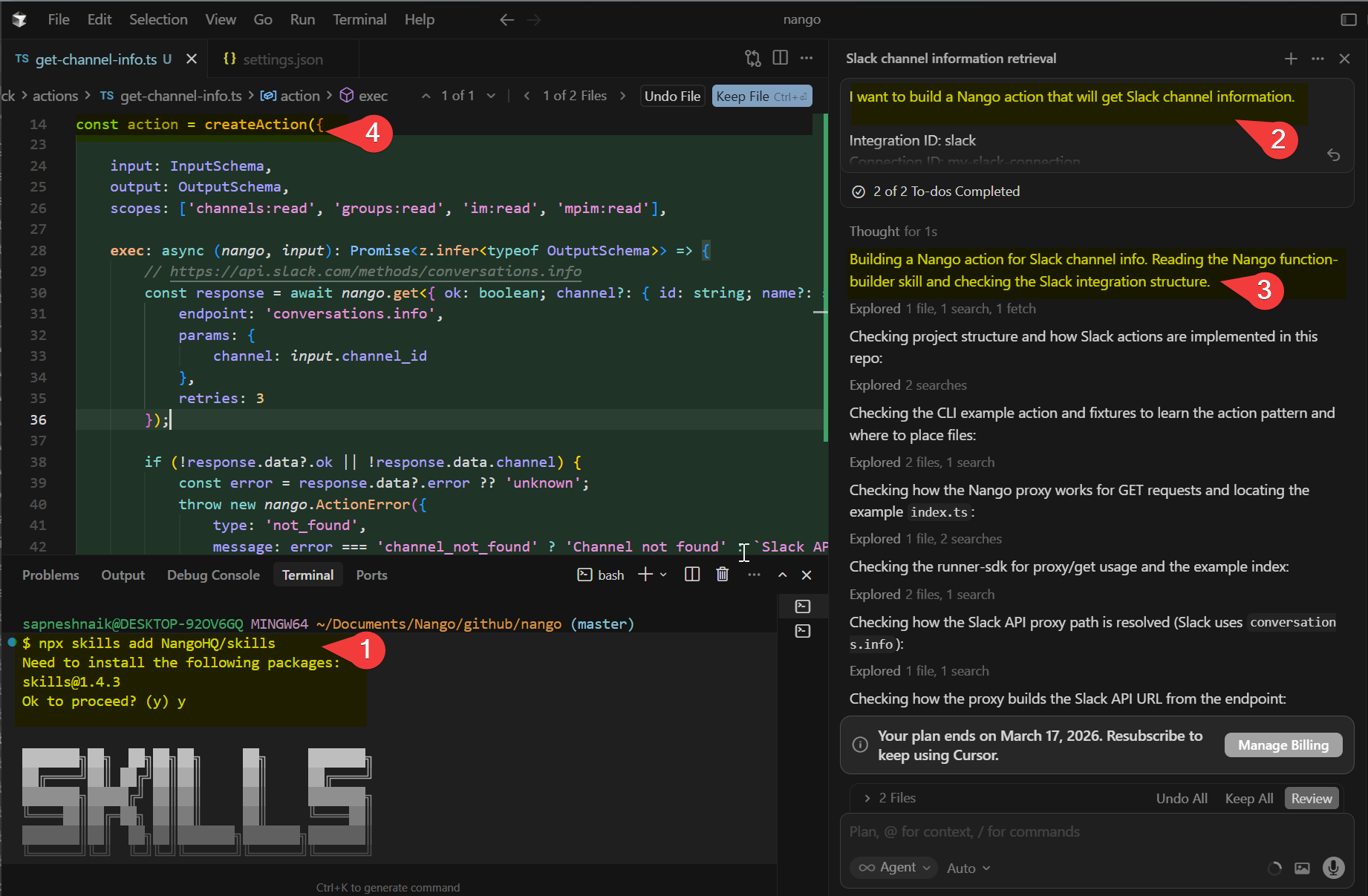
Support for MCP Auth
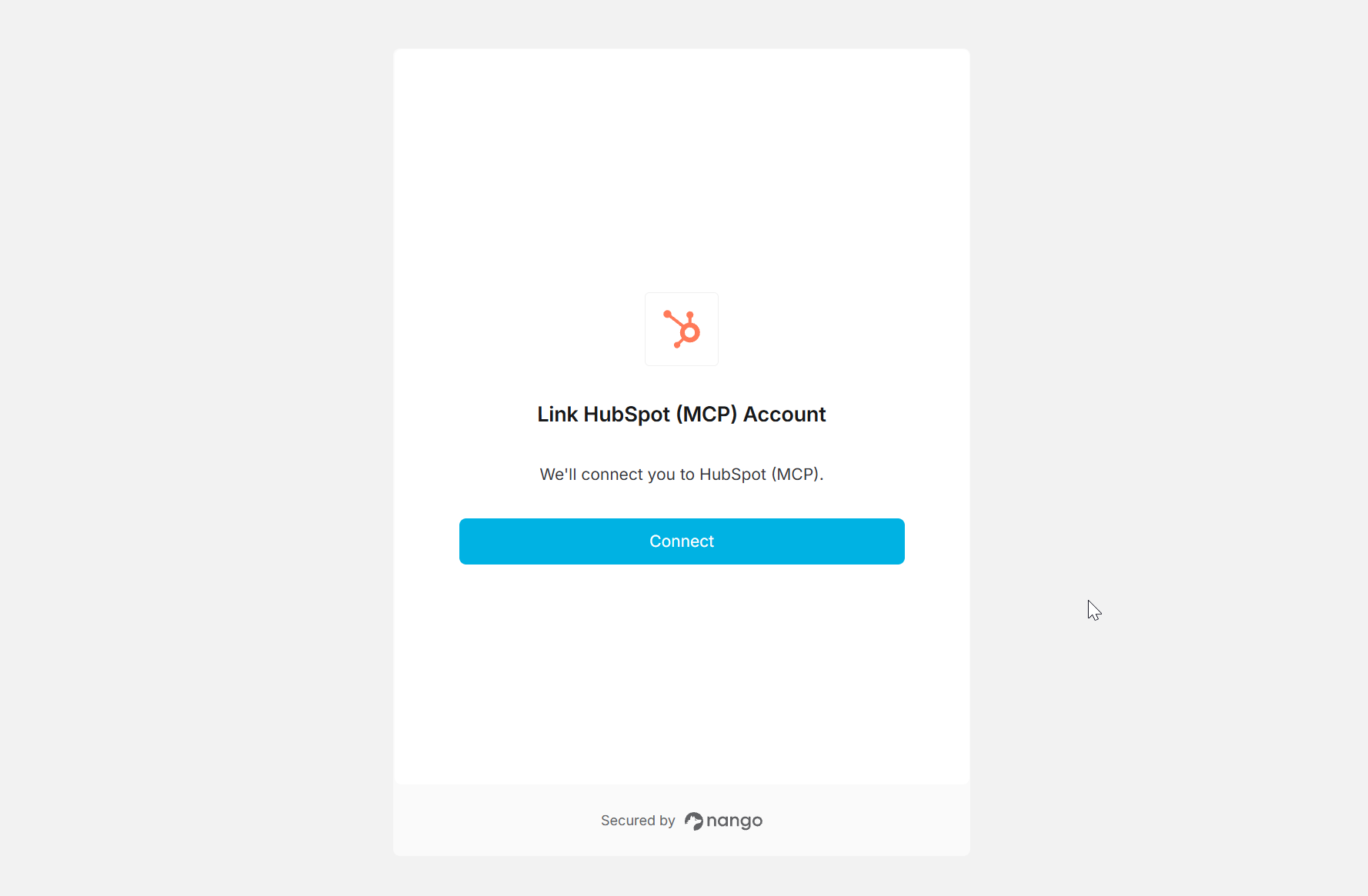
We added full platform support for Model Context Protocol (MCP) Auth integrations, starting with HubSpot MCP and Granola MCP.You can now authenticate and connect your AI Agents with providers that support MCP Auth.
New blog posts
New posts from the Nango team in February:January 2026
37 new APIs in January
37 new APIs in January
- 3CX
- 8x8
- Adobe Commerce
- Atlassian Service Account (API Token)
- Atlassian Service Account (OAuth 2.0)
- Bird
- Canvas LMS
- Cloudbeds
- Constant Contact
- DemoDesk
- Crisp (Plugin Install)
- ECU360 (Test)
- ECU360 (Production)
- FreeAgent
- FreeAgent (Sandbox)
- Google Meet
- Greenhouse Harvest Partner (V3)
- Greenhouse Harvest (Client Credentials V3)
- Looker
- Meta Marketing API
- Juniper Mist
- Mollie
- ModMed
- Nerdio
- nocrm.io
- Oomnitza
- Perdoo
- Pylon
- Procore
- Reapit Connect
- Schwab
- ServiceNow (Client Credentials)
- Stripe (API Key)
- Wiseagent
- WorkOS
- Workday (Refresh Token Auth)
- Wise (API Key)
Sync cache data retention and pruning
We added automatic data retention policies for records stored in the Nango sync cache. These policies ensure payload data is not retained indefinitely.- Automated payload pruning: If a record has not been updated for 30 days, we automatically empty its payload.
- Automated hard deletion: If a sync has not executed for 60 days, we permanently delete all records belonging to that sync (payload and metadata).
PATCH /records/prune to empty record payloads on demand while preserving the metadata. See the Prune records API reference.Support for Salesforce JWT Bearer auth
You can now authenticate with Salesforce using the JWT Bearer flow. This enables server-to-server authentication using a dedicated “API user” inside the customer’s Salesforce org.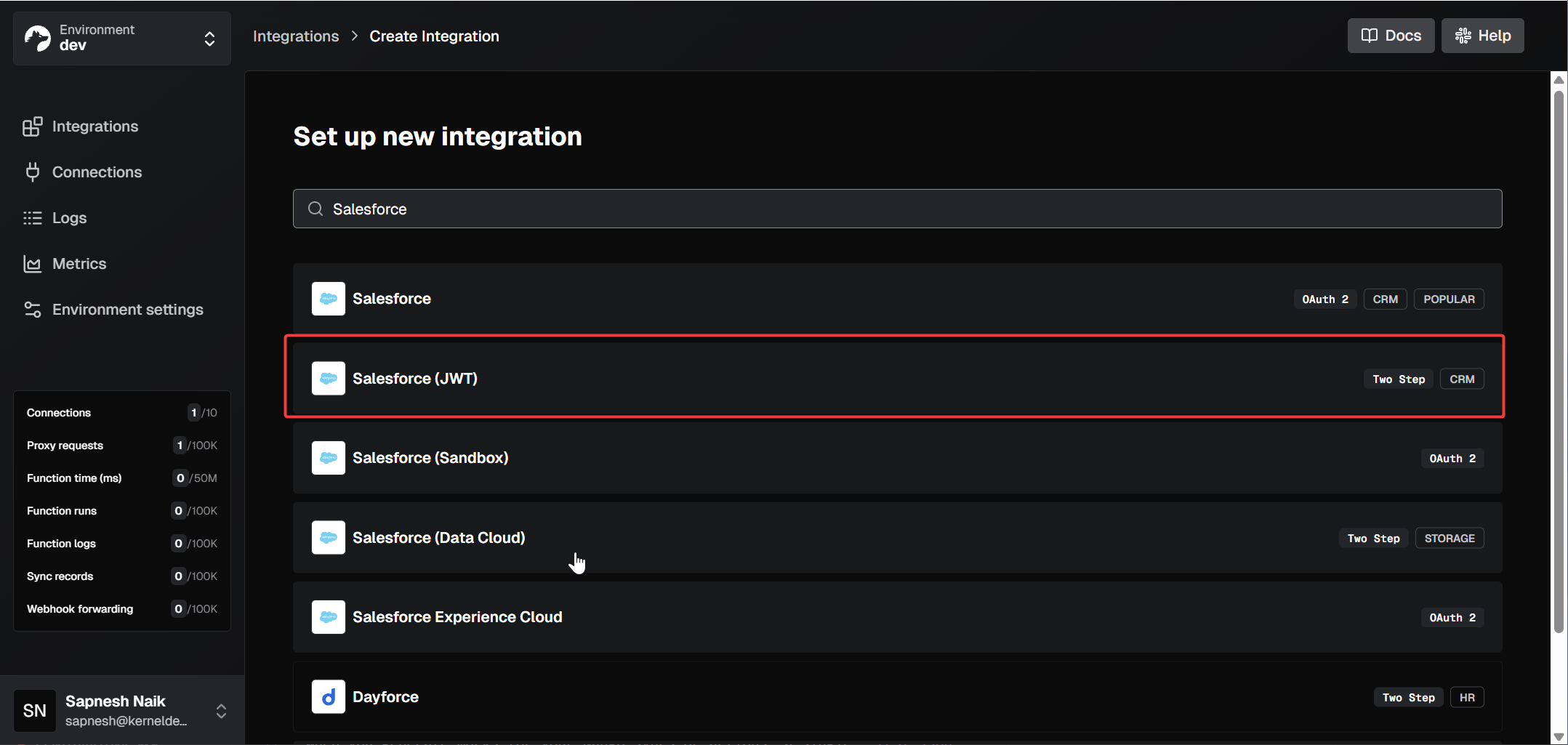
Shareable Connect UI links
You can now generate and copy a shareable Connect UI link directly from the Nango dashboard. This enables you to create a link in Nango and share it with another person to complete the auth flow.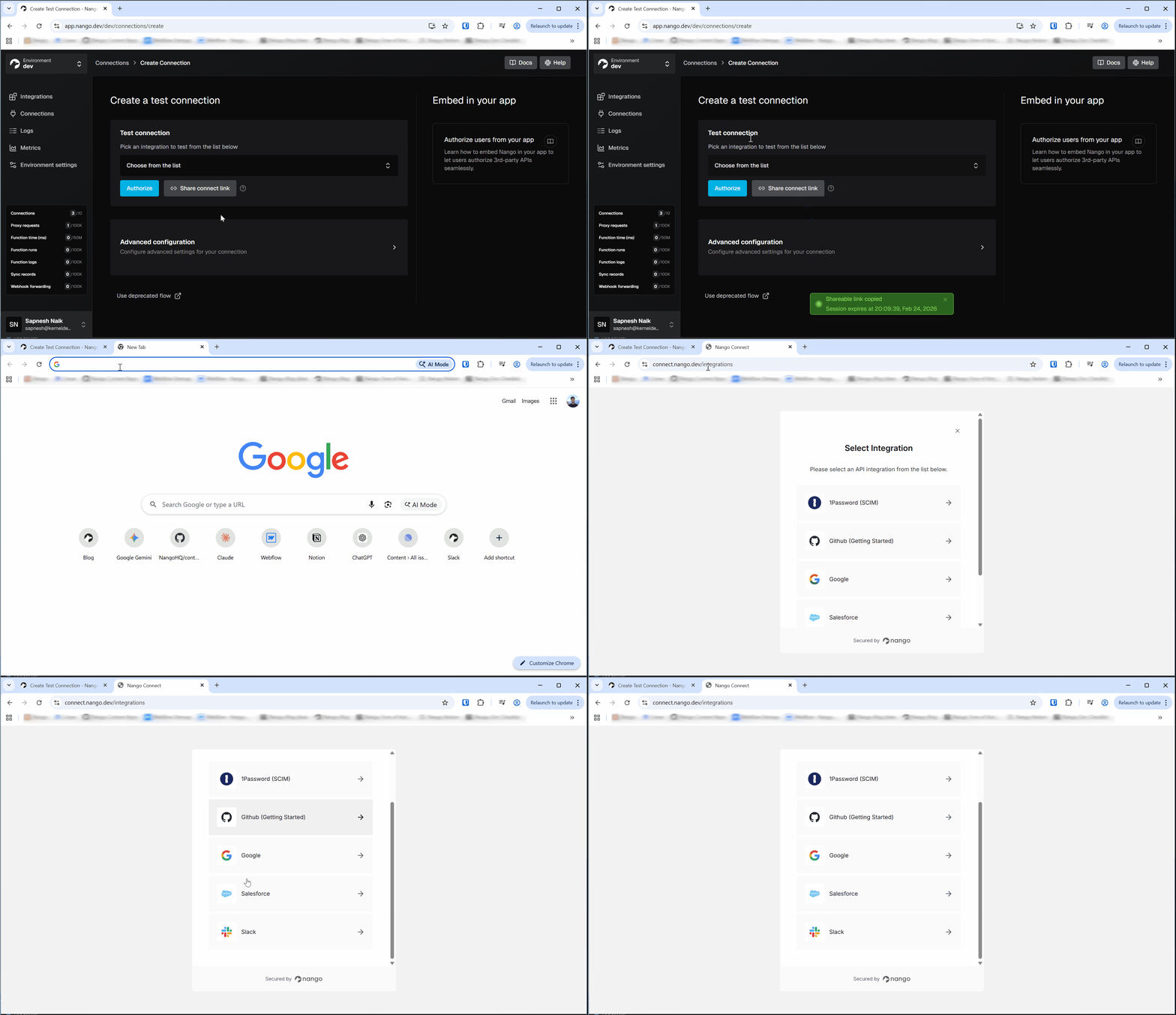
Mobile-friendly Connect UI
We updated the Authorization flow UI to optimize the layout for mobile/tablet devices.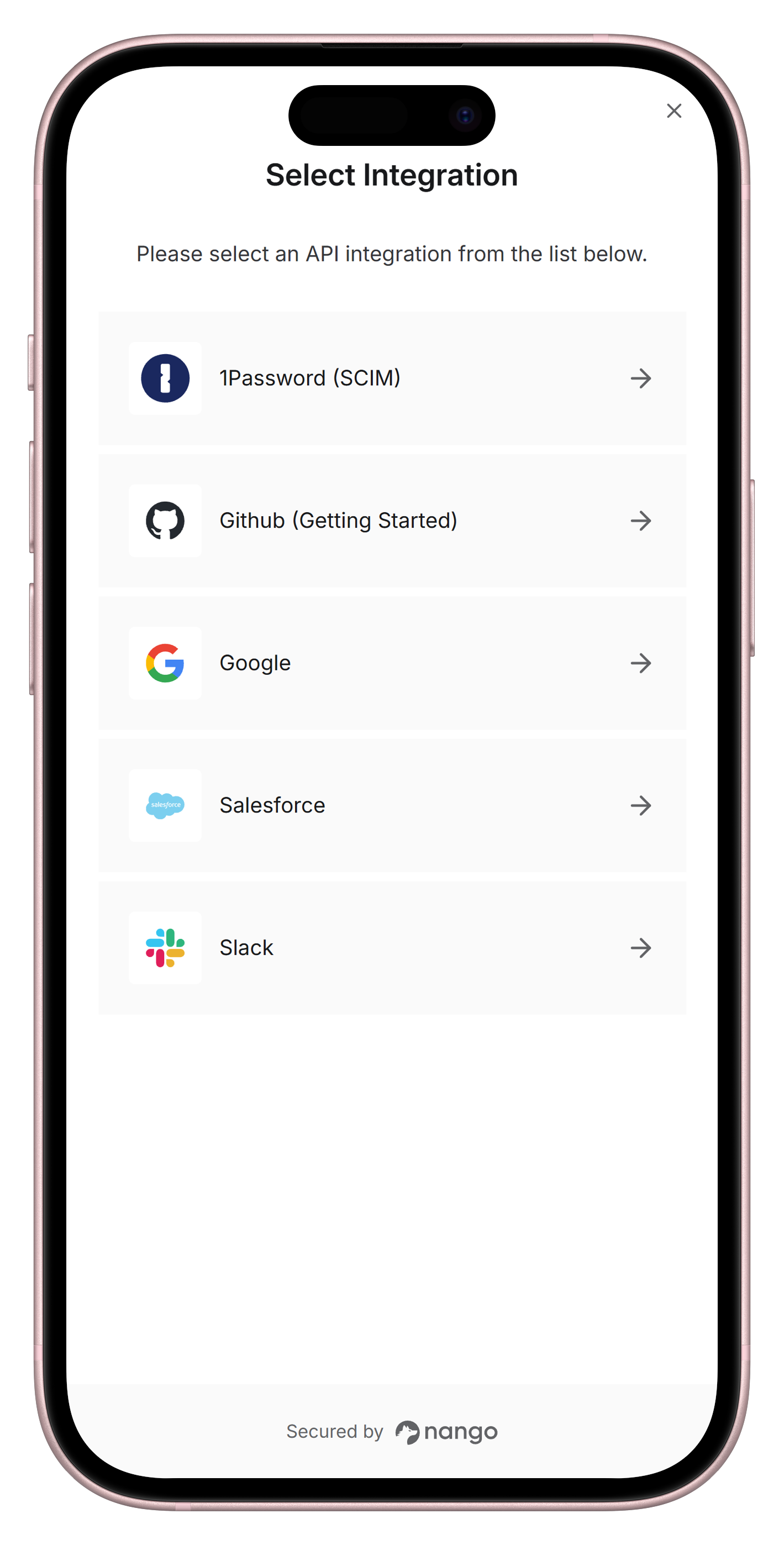
New blog posts
We published a series of debugging guides detailing what causes OAuth refresh tokeninvalid_grant or BAD_REFRESH_TOKEN errors and how to fix them across various providers:- QuickBooks OAuth refresh token invalid_grant
- Airtable OAuth refresh token invalid_grant
- GitHub App OAuth BAD_REFRESH_TOKEN
- Microsoft OAuth refresh token invalid_grant
- LinkedIn OAuth refresh token invalid_grant
- Slack OAuth refresh token invalid_grant
- Stripe OAuth refresh token invalid_grant
- Shopify OAuth refresh token invalid_grant
- Xero OAuth refresh token invalid_grant
- Linear OAuth refresh token invalid_grant
- PostHog OAuth refresh token invalid_grant
- Notion OAuth refresh token invalid_grant
- Zendesk OAuth refresh token invalid_grant
- Jira OAuth refresh token invalid_grant
- Gong OAuth refresh token invalid_grant
- Confluence OAuth refresh token invalid_grant
December 2025
22 new APIs in December
22 new APIs in December
Connection tags
Connections now support tags. Tags are key/value strings you attach when creating a Connect session to tie a Nango connection to a specific user, organization, or entity in your system.When a user completes an auth flow, Nango copies these tags to the resulting connection and includes them in the success webhook. This replaces the need for the legacyend_user and organization objects.Tags also enhance the Nango UI:-
end_user_display_nameandend_user_emailare shown directly in the connections list. -
The domain from the
end_user_emailis used to automatically display the corresponding company logo on the connection detail page.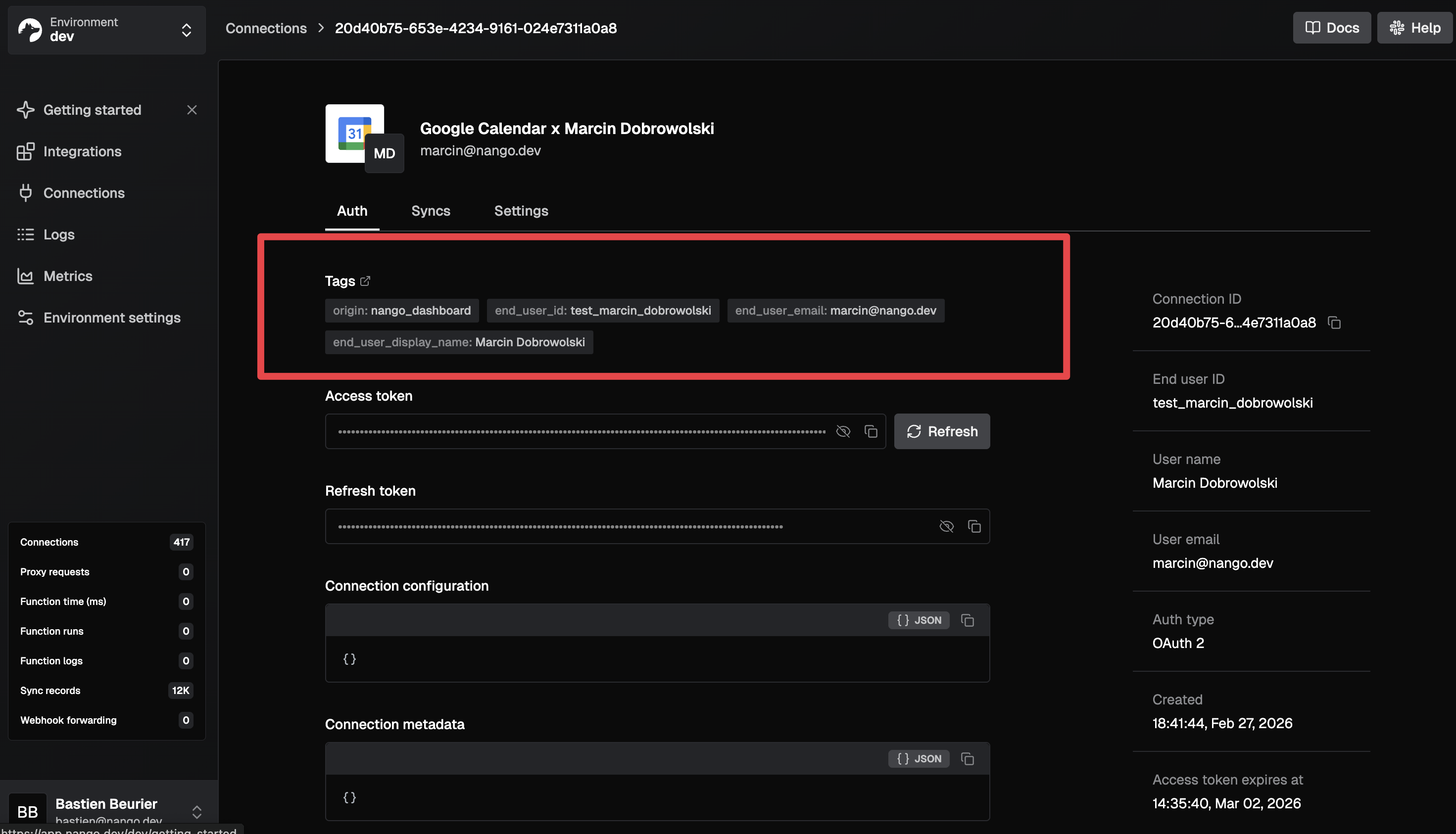
end_user or organization in Connect sessions or webhooks, follow the migration guide to move to tags.Enhanced OAuth error messaging
We rebuilt the callback experience to provide better visibility into OAuth errors. Provider error messages are now rendered directly inside the Connect UI form and the pop-up window.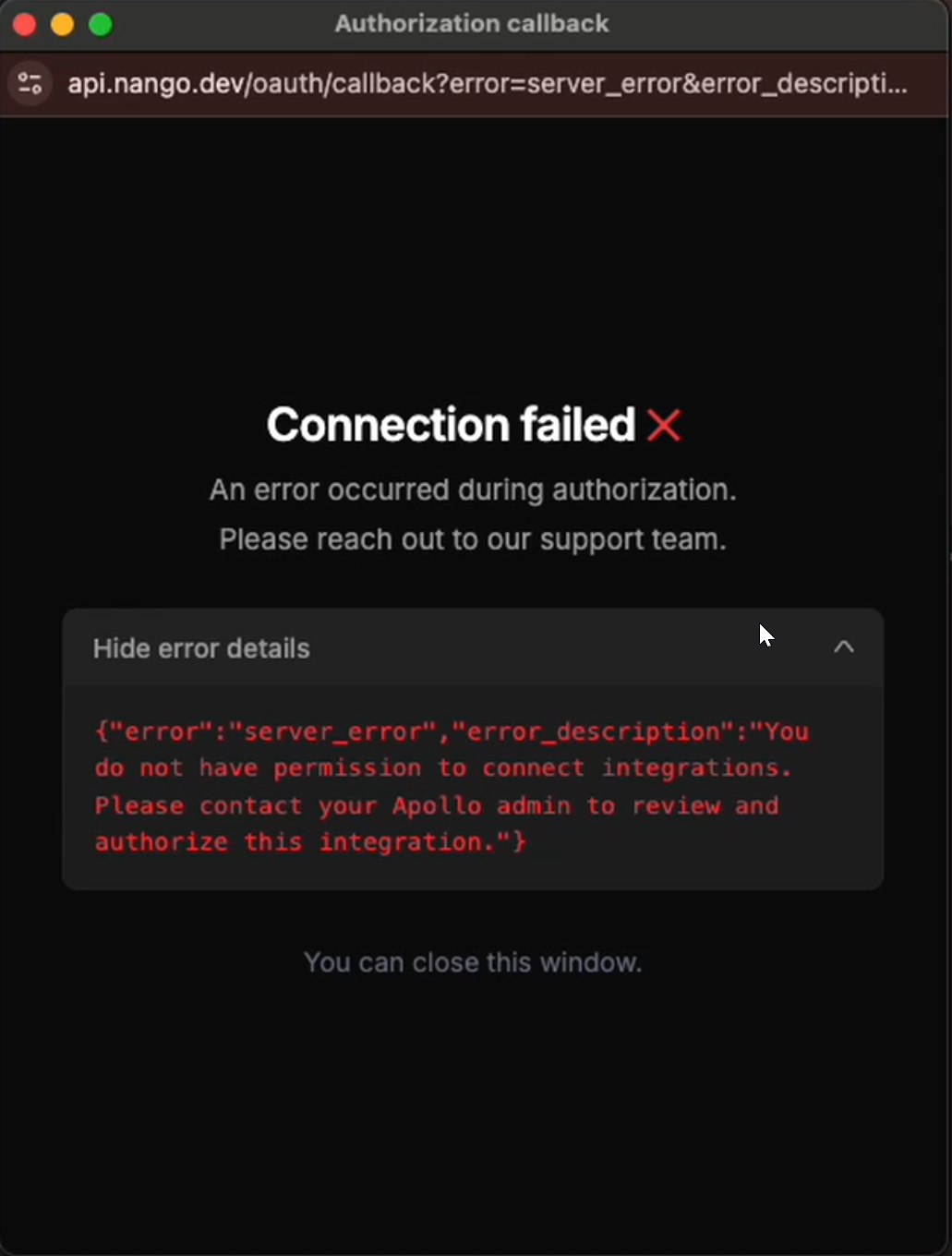
Redesigned Integrations Experience
We have overhauled the Integrations tab to streamline how you manage and scale your catalog. This update focuses on faster discovery and a more intuitive setup flow.-
Improved Search: The search on the Integrations page now considers display names, auth modes, and categories to bring you the most relevant results.
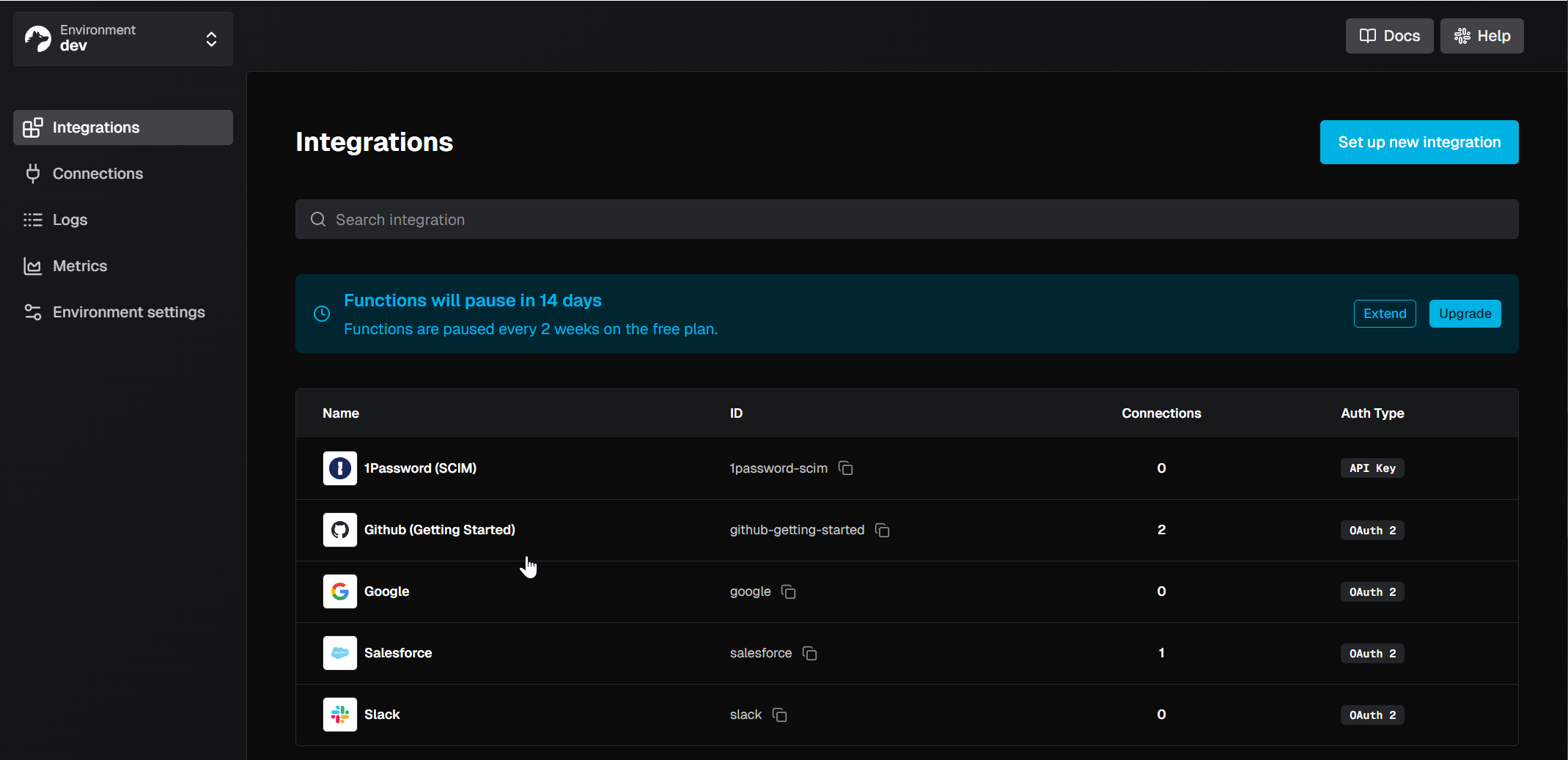
- Decoupled Creation Flow: Selecting an API in the catalog now leads to a dedicated form where you configure credentials (Client ID, Secret, Scopes) before the integration is created. This prevents empty integrations from cluttering your dashboard.
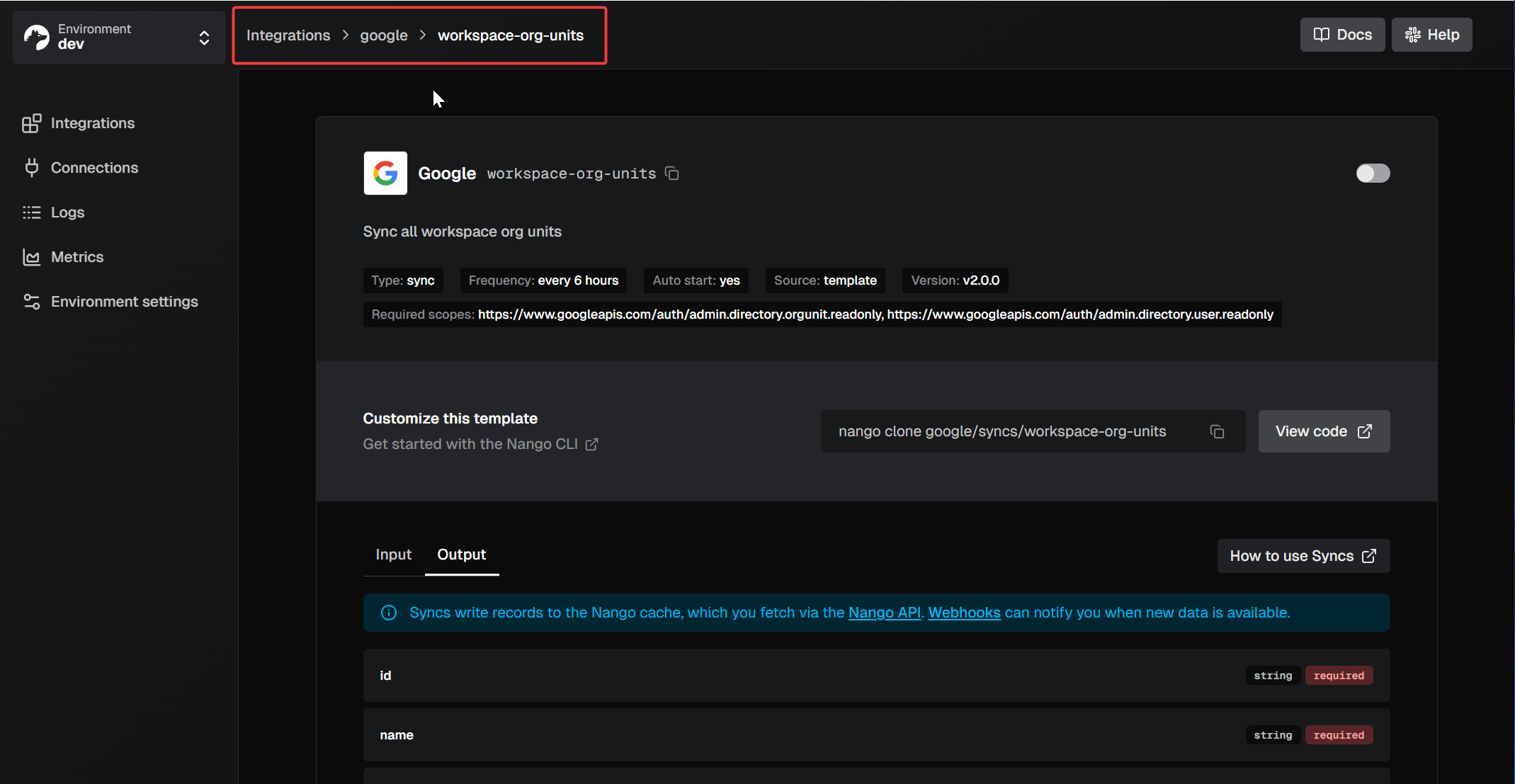
-
Improved Navigation: Added breadcrumbs to the header for better context in nested routes and a new search bar for your active integrations list.
New blog posts
New posts from the Nango team in December:November 2025
27 new APIs in November
27 new APIs in November
- Apify
- Auvik
- Breezy HR
- CrowdStrike
- Cursor Admin
- Crisp
- DrChrono
- ContactOut
- Fellow
- GitLab (Personal Access Token)
- HeyReach
- Icypeas
- LeadMagic
- Mimecast
- NinjaOne RMM
- Passportal
- Rocketlane
- Prospeo
- PracticeFusion
- Semrush (v3)
- Shipstation (v2)
- TikTok Personal
- Valley (API Key)
- Valley (OAuth)
- Wiza
- Zendesk Sell
- Zoho Recruit
Advanced connection settings
You can now set advanced configurations directly in the Nango UI when creating a connection. This form is split into two distinct sections.Firstly, you can specify end-user data. This includes setting a custom ID, email, and display name for the connection.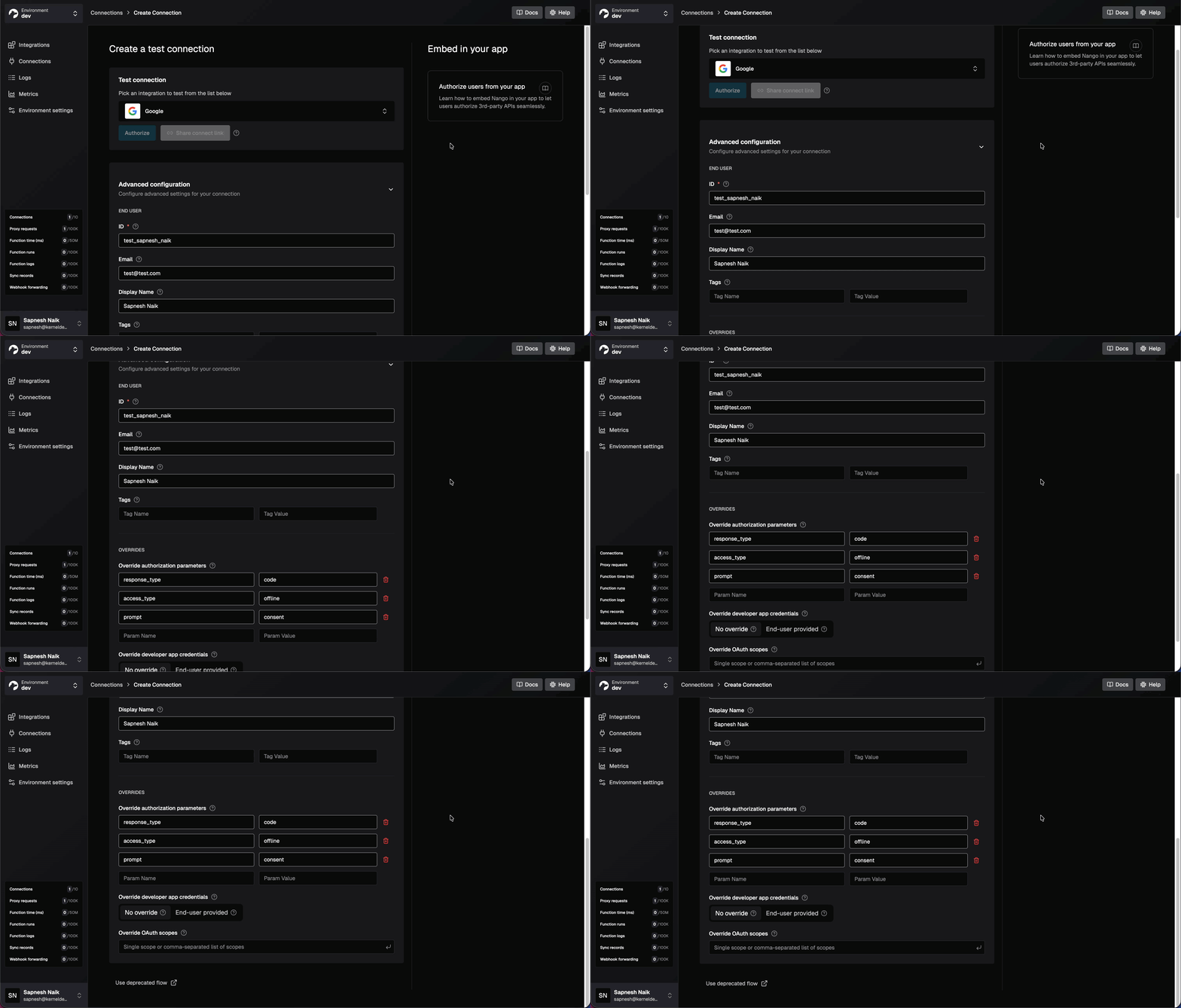
Template cloning via CLI
The Nango CLI now includes anango clone command. This automates the process of pulling function templates and their dependencies from the Nango integration templates repository.This replaces the manual process of copying and pasting configuration and TypeScript code. You can clone an entire integration directory, a specific category of functions, or an individual template.Better support for Monorepos & Package Managers
We’ve improved how the Nango CLI detects and interacts with your environment, specifically for non-NPM setups:- Monorepo detection: The CLI now traverses parent directories to find your lockfile or
package.json. If you runnango initin a subdirectory, it will correctly identify and use your rootpnpm,yarn, orbunconfiguration. - Opt-out of auto-installs: To prevent the CLI from modifying
package.jsonin sensitive environments (like CI or projects using pnpm catalogs), use the new--no-dependency-updateflag or set theNANGO_CLI_DEPENDENCY_UPDATE=falseenvironment variable. - Yarn compatibility:
nango initnow works out of the box for Yarn users, correctly flagging projects as standalone and using thenode-moduleslinker.
New blog posts
New posts from the Nango team in November:October 2025
23 new APIs in October
23 new APIs in October
- Adobe Workfront
- Affinity (v2)
- Aimfox
- Aimfox (OAuth)
- Atlassian Government Cloud
- Folk
- Ironclad
- Loop Returns
- MCP Server OAuth2 (Generic)
- Microsoft (Admin)
- Microsoft Excel
- Momentum.io
- OneDrive Personal
- OneLogin
- Pennylane (Company API)
- PingOne
- PingOne (Client Credentials)
- SAP Fieldglass
- SAP Business One
- Statista
- Streak
- Teamleader Focus
- Snipe-IT
CLI interactive mode
The Nango CLI now supports an interactive mode that prompts for missing arguments. For example, runnango create without specifying the function type, integration, or name, and the CLI will ask for them. Interactive mode is on by default in interactive terminal sessions.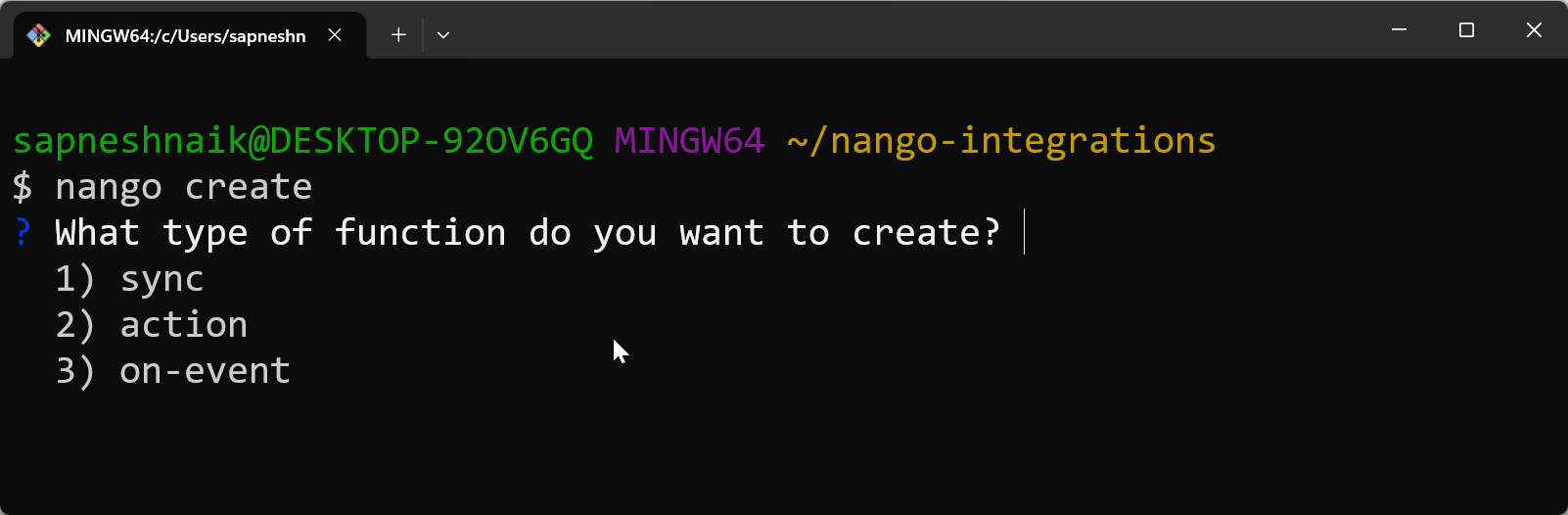
nango create --sync --integration my-api --name get-contactsTo turn off interactive mode, use the --no-interactive flag, or set the CI environment variable for CI/CD environments.Change in mock file structure for Nango integration tests
We have moved from a multi-file mock format to a single.test.json.When you generate mocks for your Nango syncs or actions, a single .test.json file is generated next to your test file. The file contains input, output, Nango stubs, and API response mocks, organized by method and path. This keeps test data in one place, making tests easier to run and maintain. See mock file structure.Migration Note: See migrating from the old format if you have tests still using the old multi-file mocks.Integrating Nango into your CI/CD processes
- CI/CD for Nango integrations: A complete guide on integrating Nango into your CI/CD processes.
New blog posts
New posts from the Nango team in October:- Best practices for building a unified API
- HubSpot OAuth BAD_REFRESH_TOKEN — What it means & how to fix it
- Best iPaaS for API Unification
- Paragon’s pricing: What You Should Know Before Signing Up
- Merge pricing: What you should know before you commit
- The 4 most popular Paragon alternatives
- The 4 most popular Merge.dev alternatives
September 2025
28 new APIs in September
28 new APIs in September
- Addepar (OAuth)
- Addepar (Basic Auth)
- ADP Lyric
- ADP Workforce Now
- Bullhorn
- Clerk
- Cursor
- DataCandy
- Fillout (API Key)
- Fillout (Oauth)
- Google Workspace Admin
- Google Service Account
- Hover
- Jobber
- Kintone
- Kintone User API
- Pax8
- Recruitee
- Sellsy
- Sellsy (Client Credentials)
- Skio
- Snapchat (Ads API)
- Tailscale (OAuth)
- Tailscale (API Key)
- Webex
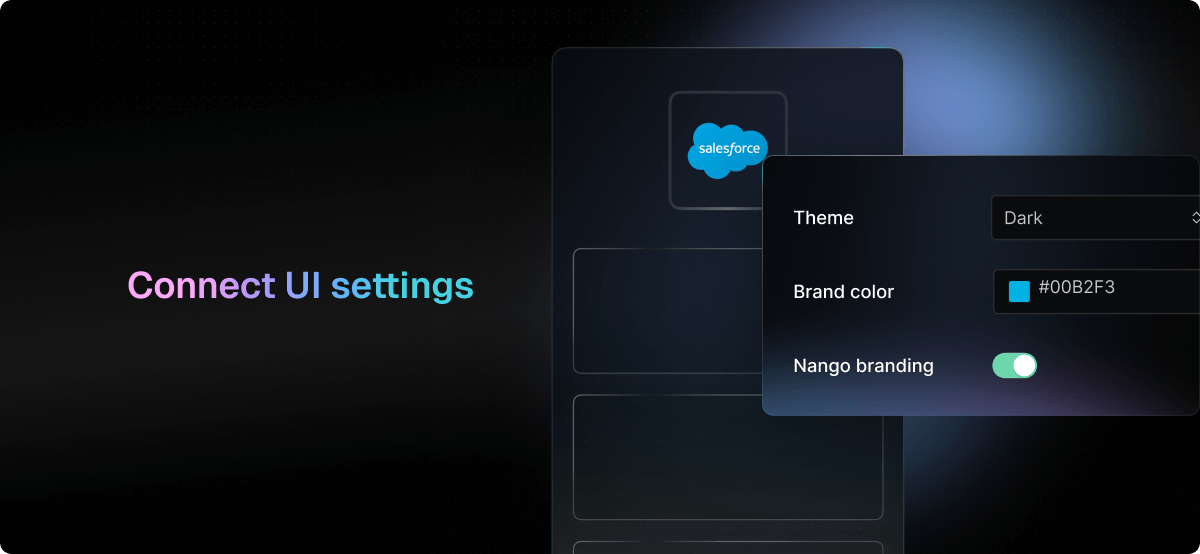
Connect UI settings
Improved deletion detection when syncing data
For APIs that don’t support deletion detection, we’ve added a new interface to detect deletions on Nango’s side when syncing data (docs).Inside your sync function, you can now callnango.deleteRecordsFromPreviousExecutions('ModelName') to detect deletions.Please note that you should only use this function if you are performing a full sync. If you are syncing data incrementally, you can periodicaly resync the whole dataset to benefit from deletion detection.Custom credentials verification
We added the ability to customize the credentials verification script, which is called when a new connection is created. For this, use the newvalidate-connection hook (docs).This lets you verify your customers’ API credentials by testing them against specific endpoints that correspond to particular API scopes.August 2025
23 new APIs in August
23 new APIs in August
- RUN Powered by ADP
- ADP Workforce Now Next Generation
- AutoTask
- Avoma
- Dayforce
- Datto RMM
- Datto RMM (Password Grant)
- Fairing
- Float
- Heap
- IT Glue
- JobDiva
- JumpCloud
- Paycor
- Paycor (Sandbox)
- Pipedream (API Key)
- Pipedream (Client Credentials)
- Private API (Bearer Auth)
- Private API (Basic Auth)
- Roller
- Sage People
- Yotpo
- Zoho Calendar
TypeScript-based script configs
- Strong type safety
- Better tooling (auto-complete, linting)
- No custom syntax to learn
Developer updates distribution
You’ll now receive important developer updates about deprecations, breaking changes, and other integration-impacting news in a more structured way:- Email: Sent to everyone who signs up (with the option to unsubscribe).
- Private Slack channels: Delivered directly if your team has a dedicated channel with us.
- Community Slack: Shared in the
#dev-updateschannel. - Docs: Dedicated Dev Updates changelog.
Separate rate limits for Script API vs. Public API
Script API calls and Public API calls are now rate-limited separately. This prevents heavy script usage from affecting your ability to use the Public API (and vice versa). Both limits are soft and can be increased per customer. Limits are now properly reported in the Nango logs.New getting started flow
A redesigned onboarding screen helps you set up your first integration and call an API right after signup. This makes it easier to experience Nango’s value in just a few minutes.July 2025
Nango-provided OAuth apps for testing
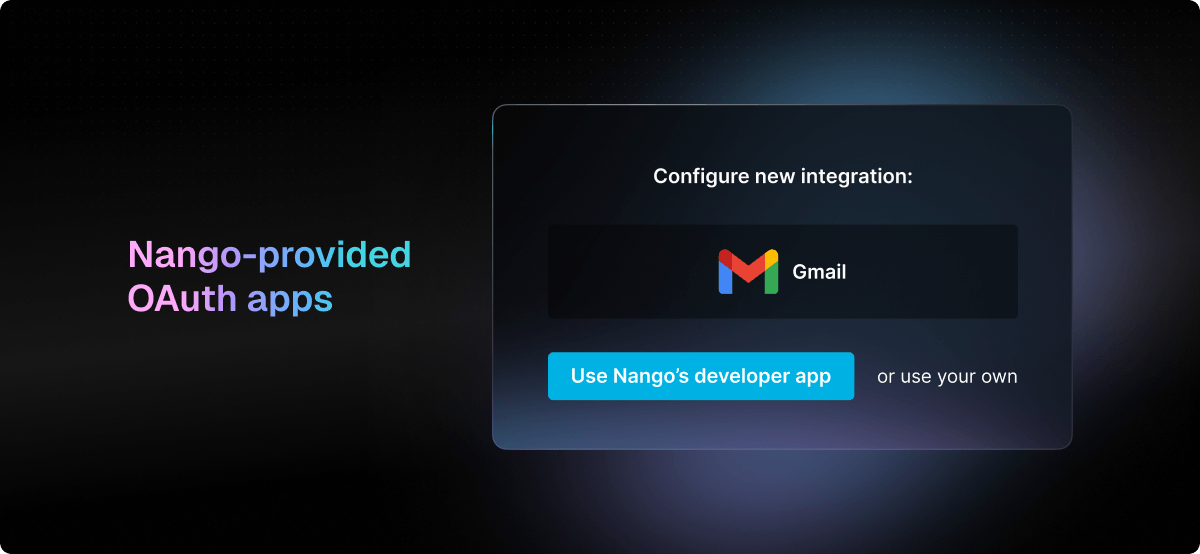
- Available for top APIs (more being added over time).
- Select this option when creating a new integration.
- For testing only—production apps should still use your own credentials to keep Nango fully white-labeled.
Edit user & org info
You can now edit the user and organization information attached to a connection. This info is visible in the Nango dashboard, helping you manage connections more easily.API reference.
Faster action execution
Action execution latency has been reduced from more than 200ms+ to less than 50ms. This makes actions feel much more responsive, especially when a human is waiting for the result.API-specific docs with getting started
Each API-specific doc now includes a “Getting Started” section so you can:- Run the auth flow
- Make a first successful API request
June 2025
7 new APIs in June
7 new APIs in June
Generate integrations with AI

Guide.
Self-serve subscription upgrades
You can now upgrade or downgrade your plan directly in the Nango UI, under Usage & Billing.Note: Legacy plans still require contacting us.
Usage reporting
The Usage & Billing tab now includes detailed usage reports:- Track all metrics that affect billing.
- See past invoices with a full breakdown.
Improved self-hosted release process
We’ve formalized the release process for self-hosted Enterprise customers:- Two-month release cadence
- Semantic versioning adopted
- Clearer update process in the self-hosting docs.
May 2025
Nango as an MCP server

- Build and enable/disable tools with Nango actions.
- Use them via the MCP protocol.
Guide.
Localized Connect UI
You can now localize the Connect UI:- Choose a language.
- Override links to end-user guides with your own versions.
Docs.
Asynchronous actions
You can now run actions asynchronously—triggering them without waiting for an immediate result. This is useful when:- Tasks take a long time to complete.
- You don’t need the response right away.
- Actions should be retried for reliability.
- You’re sending many actions at once.
Docs.
Granular time windows in logs
You can now filter logs by precise time windows, making it easier to drill down into specific events for debugging.April 2025
27 new APIs in April
27 new APIs in April
- ADP
- Auth0 (Client Credentials)
- Azure DevOps
- ClickSend
- CompanyCam
- Confluence (Basic Auth)
- Cyberimpact
- Devin
- DocuWare
- Employment Hero
- Gem
- Grammarly
- Github (Personal Access Token)
- Incident.io
- Jira Data Center (Basic Auth)
- Namely
- Namely (PAT)
- Redtail CRM (Sandbox)
- Rock Gym Pro
- Rootly
- Sentry
- Shopify Partner
- Smartlead.ai
- Snowflake (JWT)
- UKG Pro (Workforce Management)
- Vercel
- Workday (OAuth)
Usage-based pricing
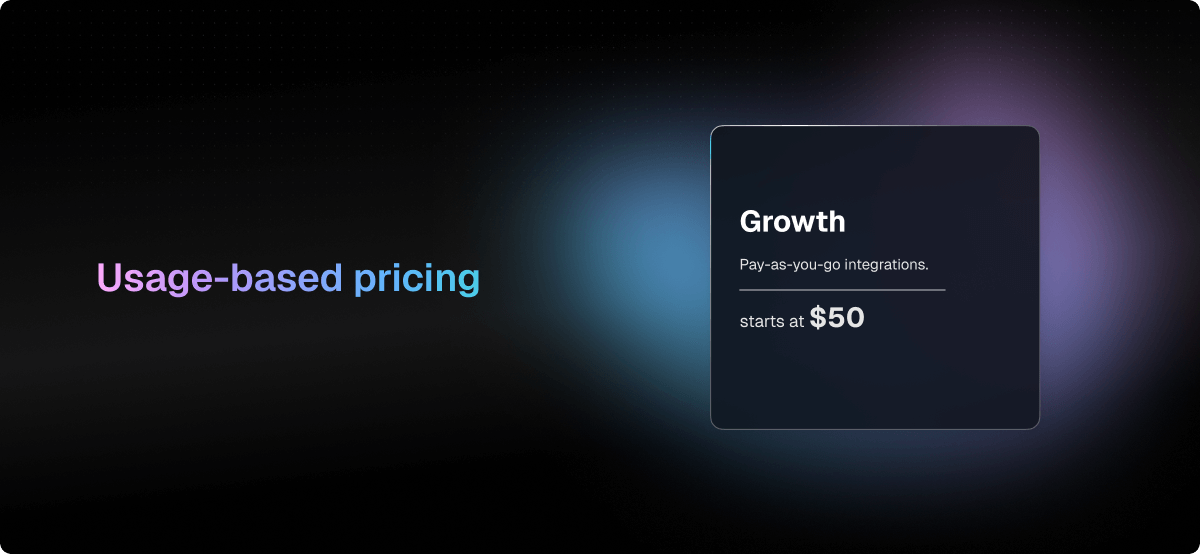
- Pricing scales with usage: connections, action executions & record syncs
- Volume discounts up to 100x included
- 1,000 free connections still available on the Free plan (unlimited on Free Self-Hosted)
- Add-ons are priced individually on a monthly basis—no large annual commitments
Logs search
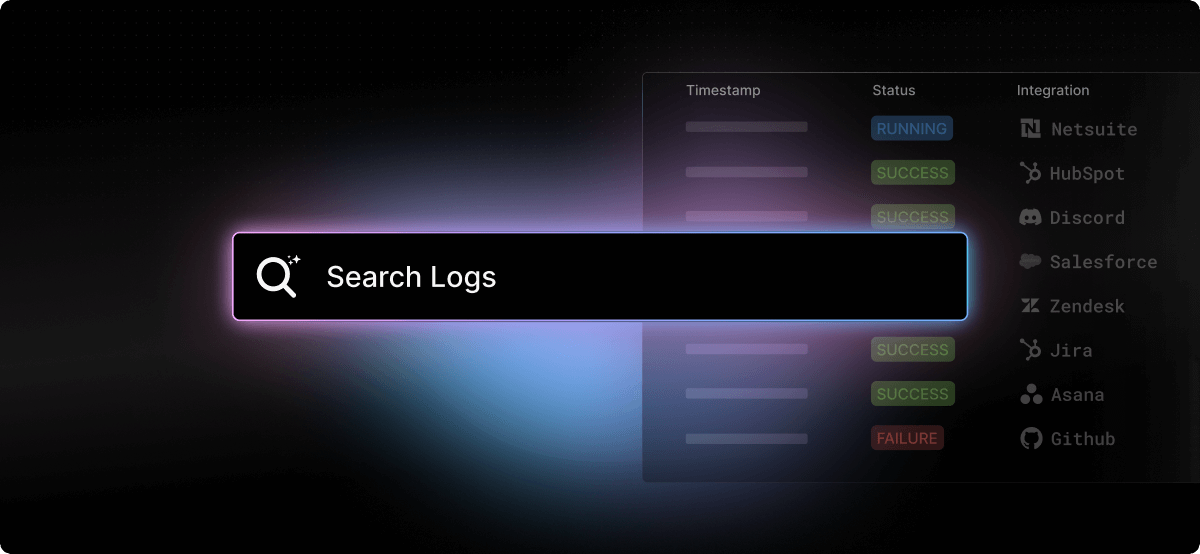
- Search across log and sub-log contents via the top-level search bar
- Filter logs using record IDs to investigate when records were synced
- Improved navigation and load times across the tab
Enterprise self-hosting with ECS + Terraform
- Automates installation for Enterprise customers
- Complements our existing Helm chart for Kubernetes
- Ongoing work to further simplify self-hosting
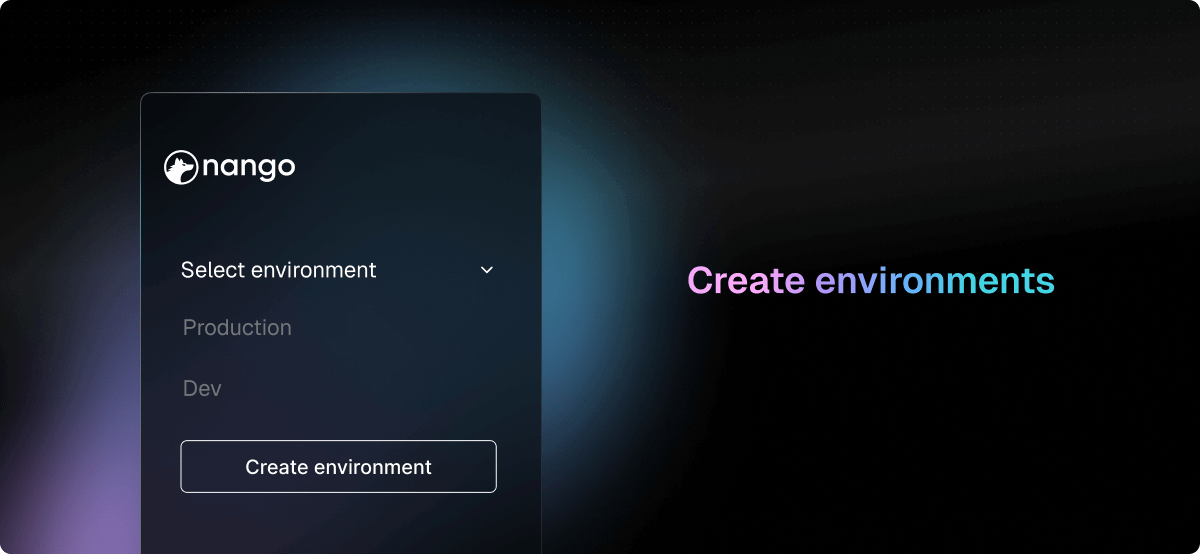
Create, edit & delete environments
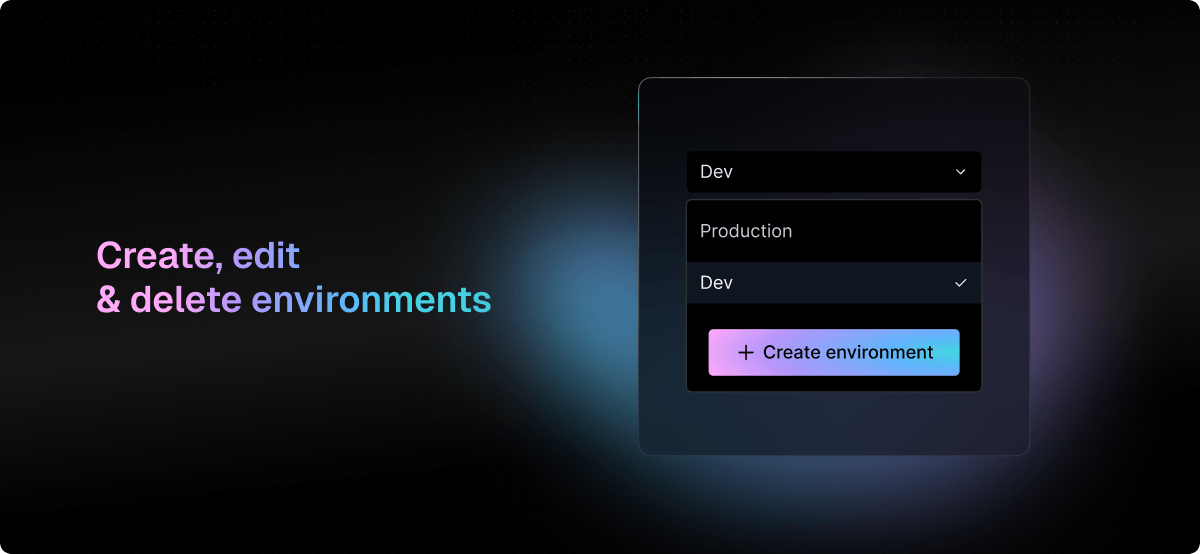
- Growth plan includes 3 environments by default
- Additional environments available via paid add-on
March 2025
17 new APIs in March
17 new APIs in March
- ActiveCampaign
- Anthropic Administrator
- Blackbaud (Basic Auth)
- Callrail
- Figma (SCIM)
- Microsoft (Client Credentials)
- Missive
- Oracle Fusion Cloud (HCM)
- Pandadoc (API Key)
- Razorpay
- Readwise
- Readwise Reader
- Rippling Shop App
- SharePoint Online (Client Credentials V2)
- Trakstar Hire
- tl;dv
- Xero (Client Credentials)
Authorization logs
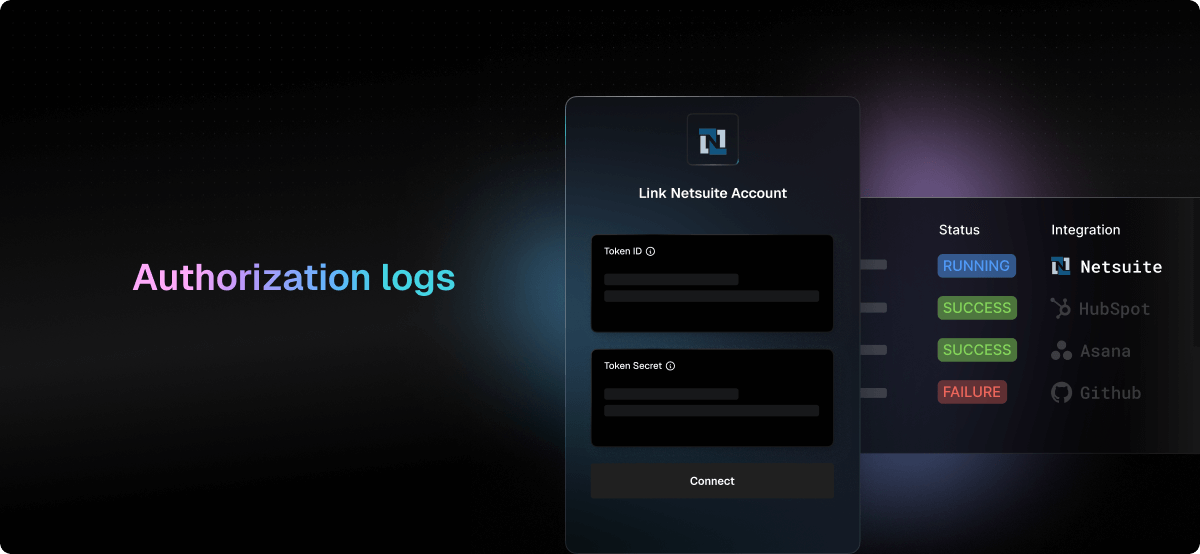
- User opened or closed the Connect UI
- User opened or closed the OAuth modal
- User viewed a new screen (integration list, input form, success/failure)
- Success
- Cancelled
- Technical failure
AI agent support
- Introspection endpoint: List available actions programmatically, exportable as OpenAI tools
- Action trigger endpoint: Run actions reliably via the API
- Integrated authorization: Use Nango’s pre-built UI to securely prompt users for access
AI agent demo video

- Reliable abstractions for complex API workflows
- Built-in authorization flows
- Reduced surface for API errors
February 2025
26 new APIs in February
26 new APIs in February
- 1Password (SCIM)
- Airtable (Personal Access Token)
- Amazon Selling Partner
- Amazon Selling Partner (Beta)
- Appstle Subscriptions
- Check
- Commercetools
- Drupal
- Google Gemini
- Guru (SCIM)
- Gorgias (Basic Auth)
- Jira Data Center (API Key)
- lemlist
- Loom (SCIM)
- MiniMax
- MIP Cloud
- MIP On Premise
- OpenAI (Admin)
- Paylocity
- Quickbase
- Retell AI
- Rippling
- Sage Intacct (OAuth)
- Salesforce (Data Cloud)
- SAP Concur
- xAI
Sync partitioning

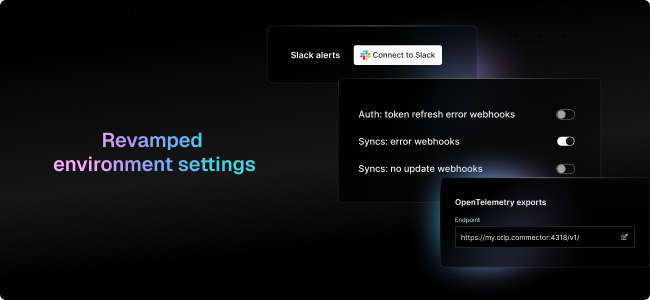
Revamped environment settings
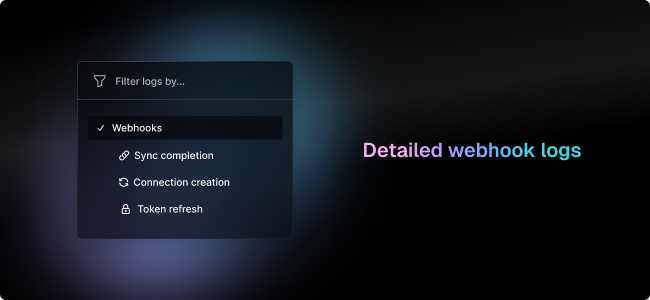
Detailed webhook logs
Real-time syncing strategies
- Deep merge (default): Nango merges partial updates automatically.
- Custom updates: Fetch full records by ID and modify them manually.
- Most recent update wins (default): The latest write—whether from a webhook or a periodic sync—always updates the record.
- Ignore older updates: When polling, Nango checks if a newer webhook update exists. If so, it preserves the more recent webhook data instead of overwriting it.
January 2025
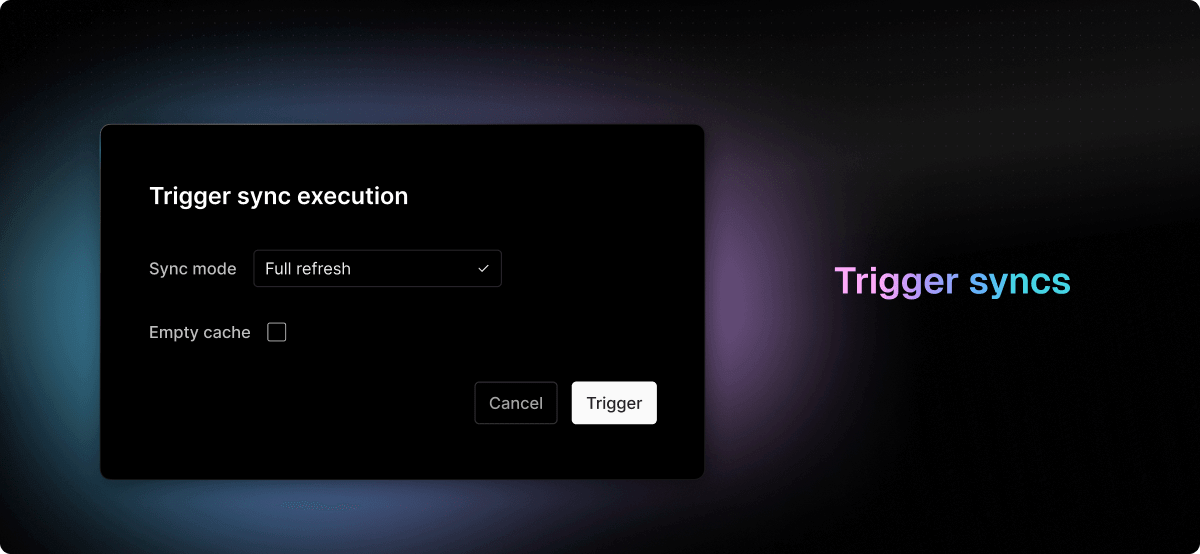
Trigger syncs
Lighter CLI

Create environments
Event-based scripts

December 2024
15 new APIs in December
15 new APIs in December
Resilient integrations
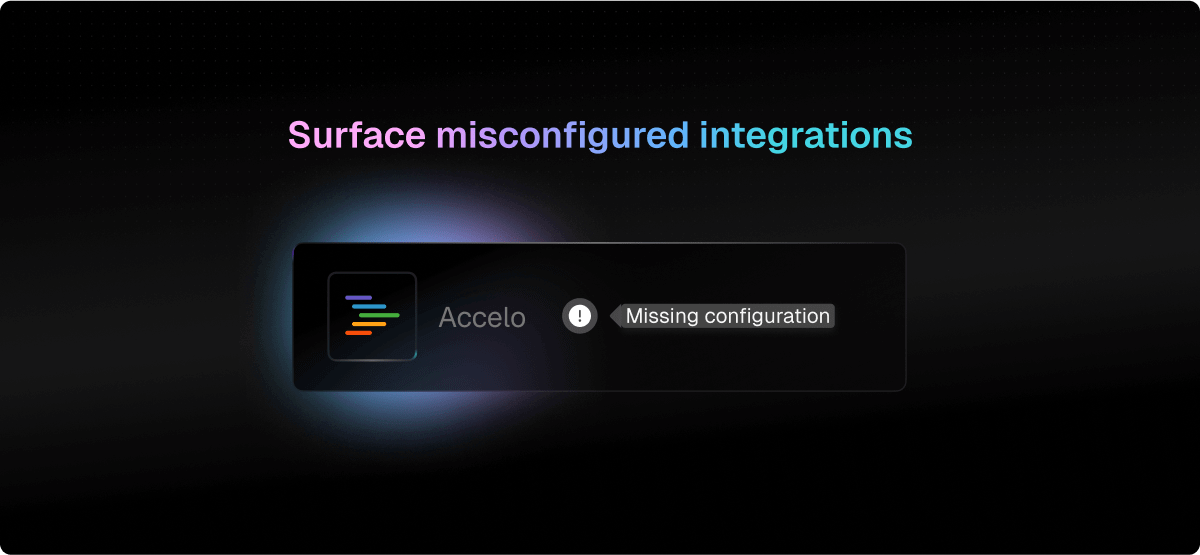
Surface misconfigured integrations
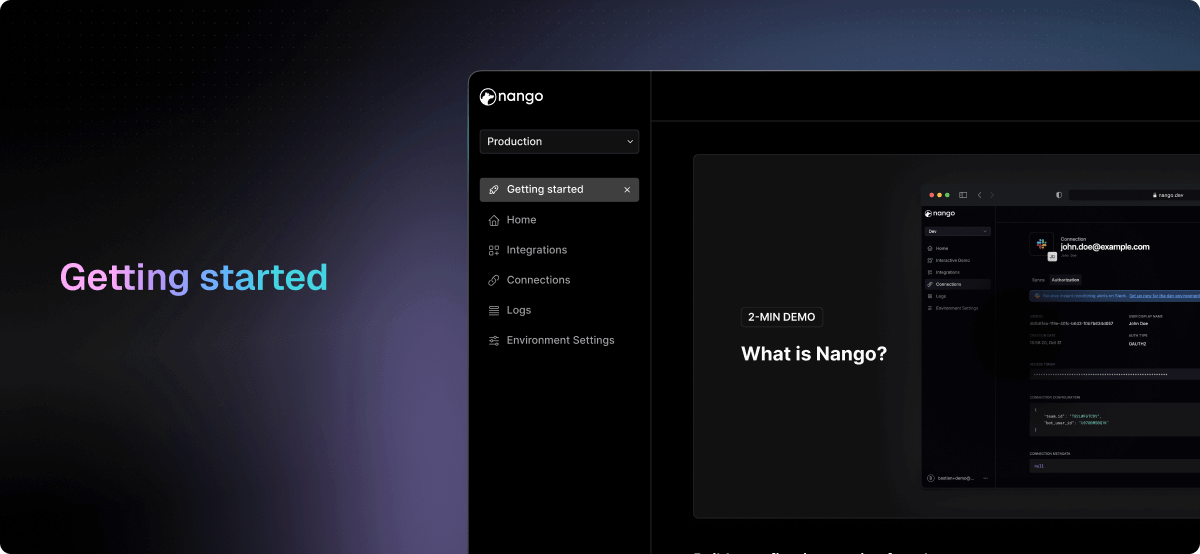
Getting started tab
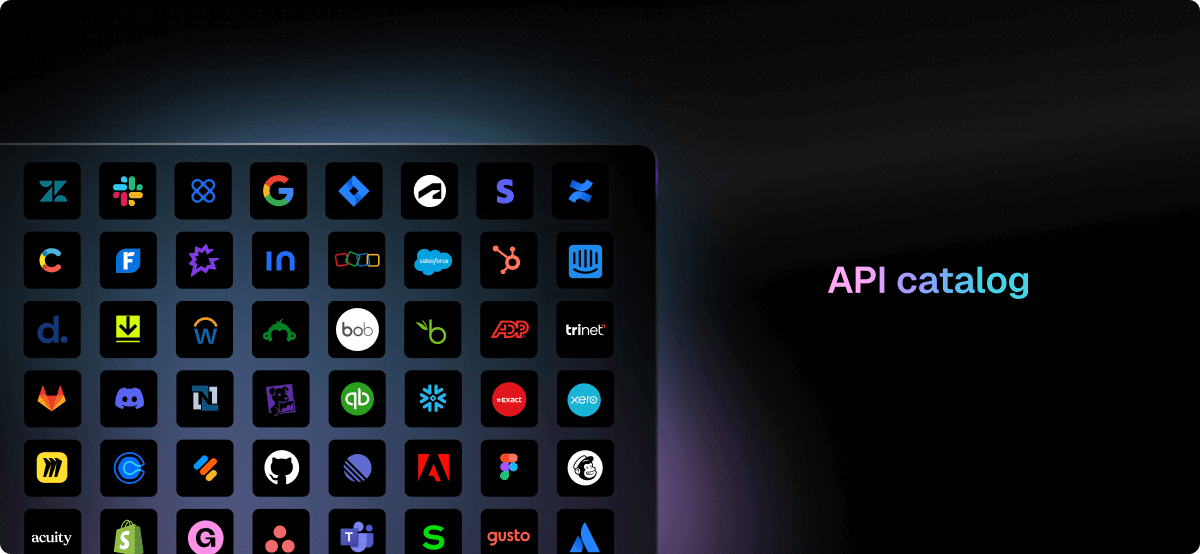
API catalog
November 2024
Guides

API-specific docs
Integration docs
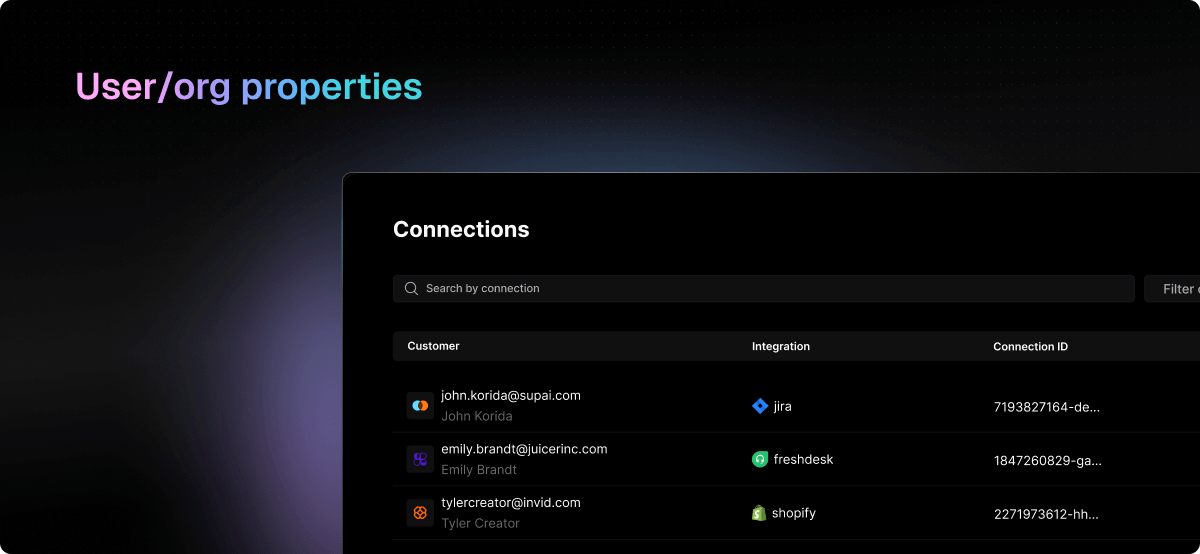
User & org information
October 2024
45 new APIs in October
45 new APIs in October
- Acuity Scheduling
- Adyen
- Aircall (Basic Auth)
- Apaleo
- Apollo (OAuth)
- Bill (Connect API)
- Bill (Connect API sandbox)
- Booking.com
- Buildium
- Chattermill
- ConnectWise PSA
- ConnectWise PSA (staging)
- Databricks (Account Level)
- Databricks (Workspace Level)
- Datadog
- Dialpad (sandbox)
- Dixa
- Eleven Labs
- Elevio
- fal.ai
- Firefish
- Ghost (Admin API)
- Ghost (Content API)
- Google Analytics
- Keeper (SCIM)
- Loops.so
- Malwarebytes
- Miro (SCIM API)
- Notion (SCIM API)
- Perimeter81
- Perplexity
- Quickbooks (sandbox)
- Ragie AI
- RapidAPI
- Sage Intacct
- Sedna (Basic Auth)
- Sedna (Oauth2)
- ThriveCart (OAuth)
- ThriveCart (API Key)
- Trello (SCIM API)
- Typefully
- Twenty CRM
- UMAPI (Adobe User Management API)
- WhatsApp Business
- Workable (OAuth)
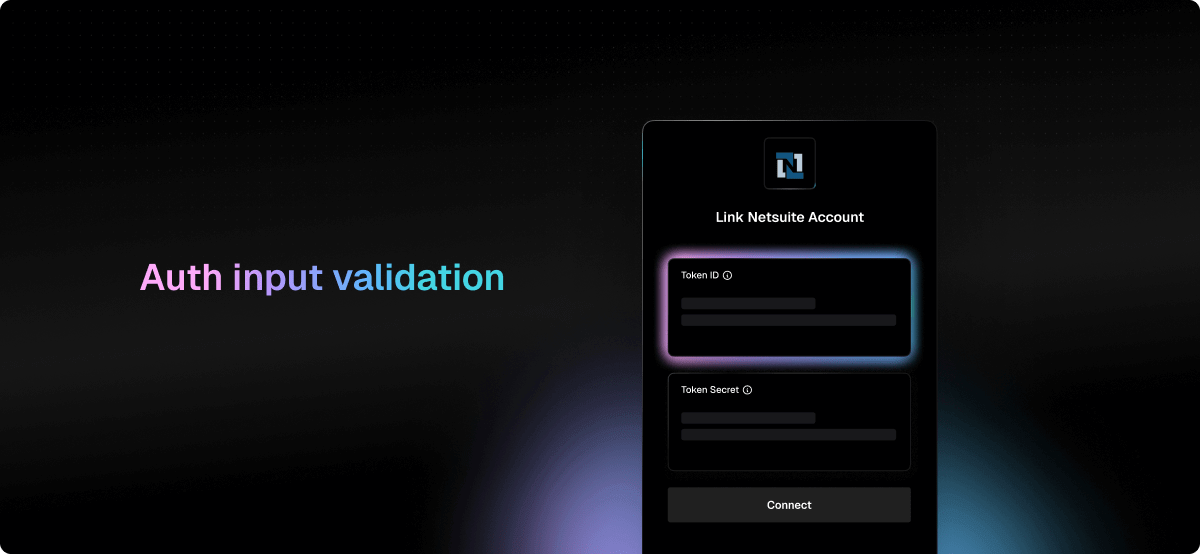
Authorization input validation
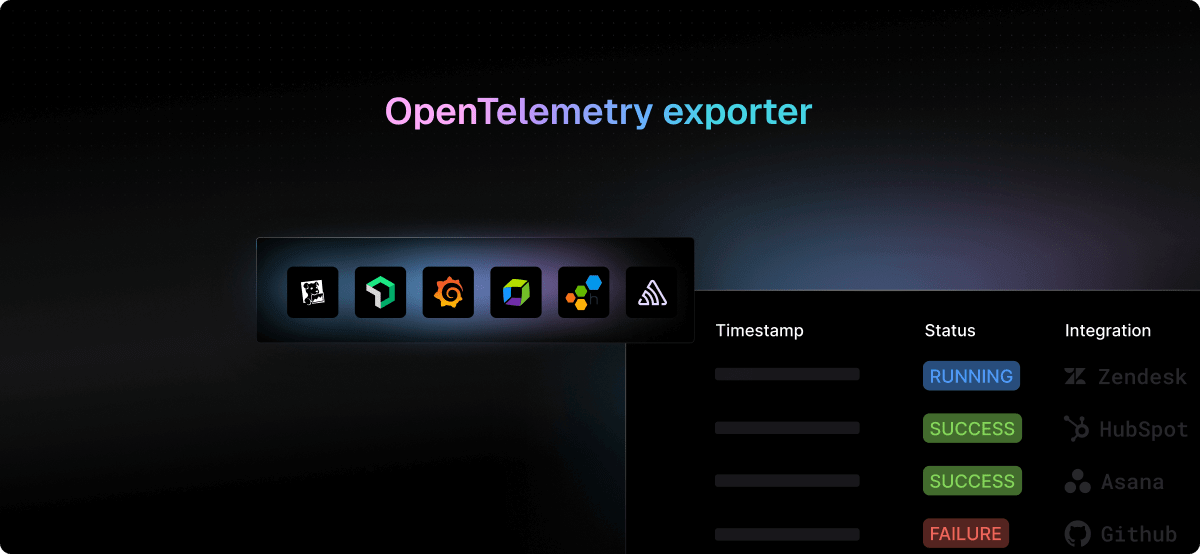
OpenTelemetry exporter
End-user authorization guides
Invalid credentials detection
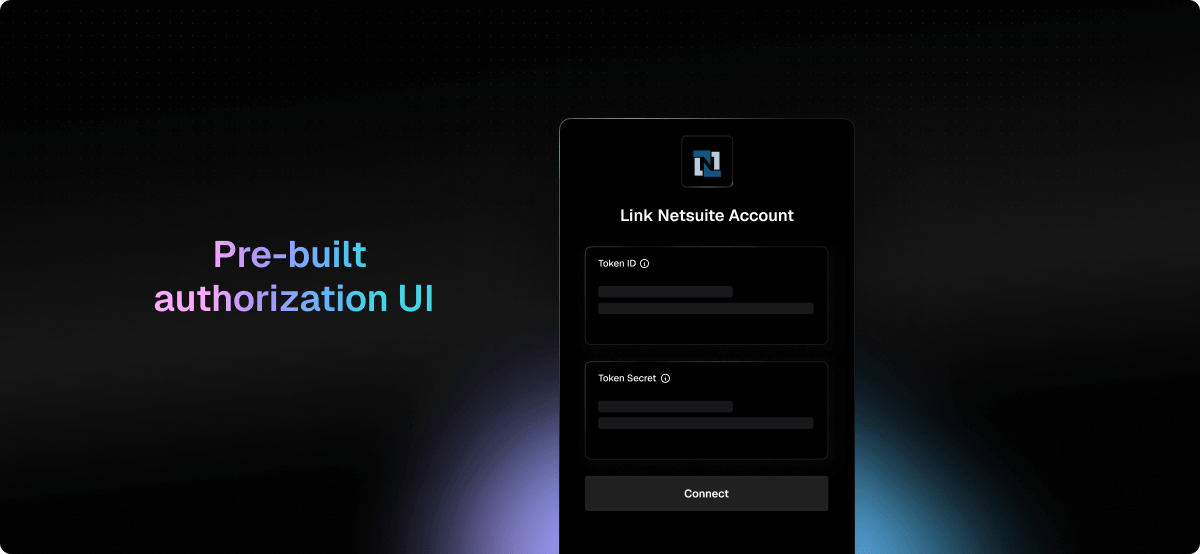
Pre-built authorization UI
September 2024
12 new APIs in September
12 new APIs in September
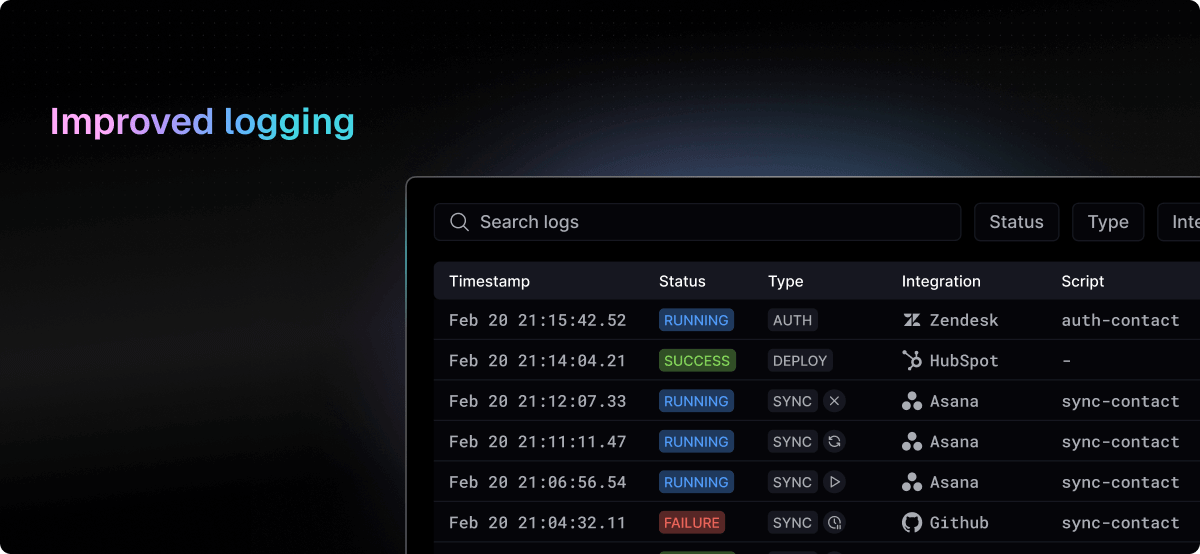
Improved logging
Higher sync frequency
SOC 2 Type 2
JSONSchema types