
TL;DR
Just-in-time API integrations (JIT) are integrations generated on demand by an AI coding agent, not pre-built by your engineering team. Most embedded iPaaS were not built for this. They handle the run side, but cannot have a coding agent author a new integration on the platform on-demand.
Embedded iPaaS in this comparison:
- Nango: Best for teams that want coding agents to build integrations on demand against any API, and AI agents in their product to call those integrations at runtime. Open-source, 1,000+ APIs, works with 18+ coding agents.
- Prismatic: Best for teams that want a visual workflow builder as the primary way for non-technical users to build integrations, with Claude Code available to scaffold flows for engineers on the same platform.
Workato Embedded and Pipedream Connect do not support JIT today. We cover them at the end.
What are just-in-time API integrations?
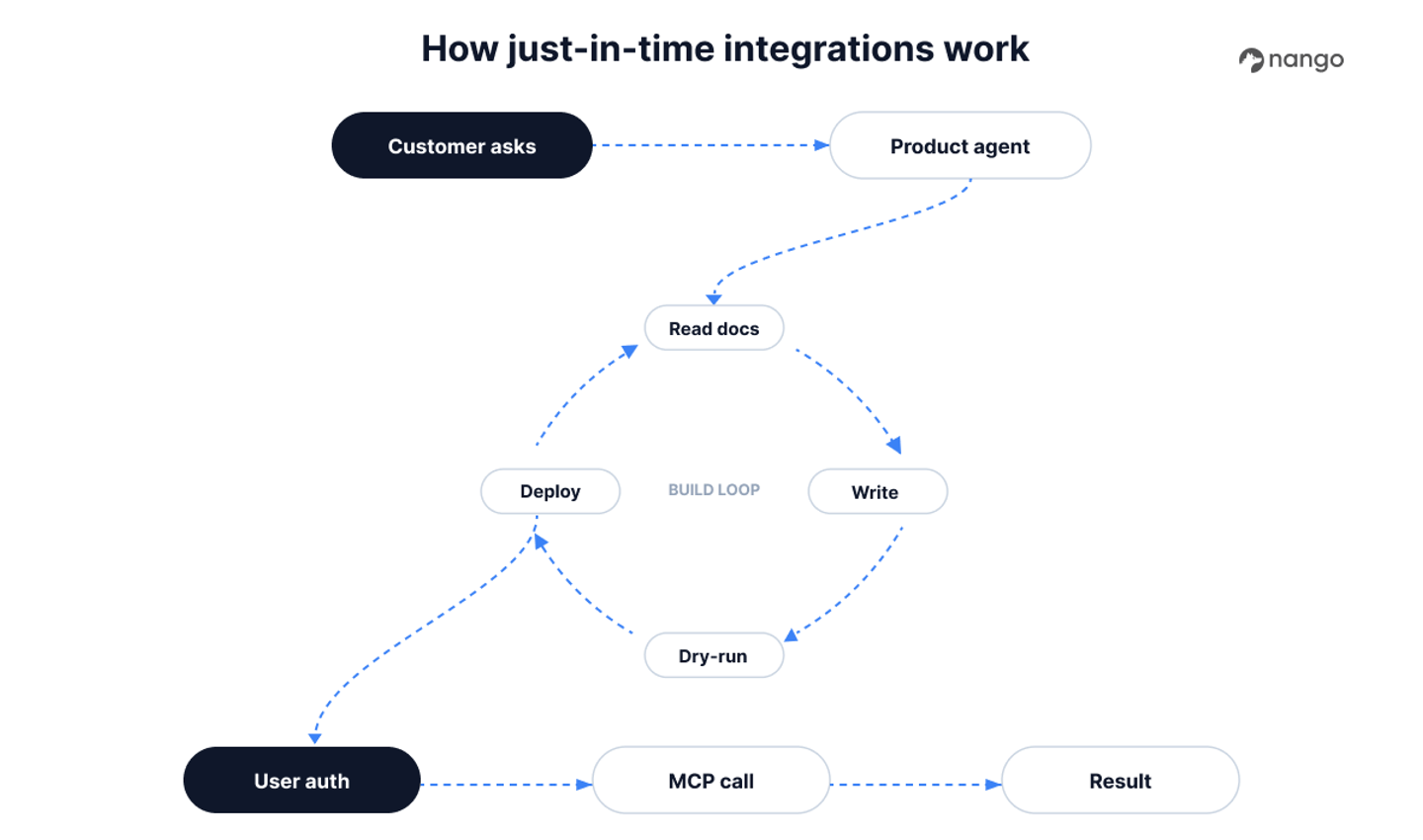
Just-in-time API integrations are built on demand by an AI coding agent when a customer asks for it. The agent reads the API docs, writes the integration, tests it against a real connection, and deploys it. The integration becomes available immediately for the AI agents inside your product to call.
This is different than how it was done traditionally. A team picks an integration off the roadmap, an engineer builds it manually or in a low-code editor, and customers wait weeks. With just-in-time integrations, the work shifts from building each integration to building the factory that produces them. See the emergence of just-in-time integrations for the full breakdown.
Why your choice of embedded iPaaS matters
Customers ask for integrations with hundreds of tools. Engineering can pre-build only a handful per quarter. The traditional embedded iPaaS model, where each integration is built by a human in a low-code editor, does not scale to that demand.
Two things changed since October 2025:
- AI coding agents can build API integrations: Claude Code, Cursor, Codex, Gemini CLI, and OpenCode can read API docs, write integration code, run it against a real connection, and iterate on errors. Nango built 200+ integrations in 15 minutes using OpenCode and the Nango builder skill.
- AI agents inside SaaS products need API access: They read CRM data, send Slack messages, draft emails in Gmail, and update tickets in Linear. The integration the agent calls at runtime is often the same one a coding agent built minutes earlier.
Just-in-time integrations sit at the intersection. The right embedded iPaaS lets a coding agent build new integrations in a sandbox. The same code then runs in production, where the AI agents in your product call it. Auth, scale, and observability are handled by the platform.
Not every embedded iPaaS does this. Most were designed for low-code builders or for fixed tool catalogs. Picking the wrong one forces your team back to building each integration manually.
What an embedded iPaaS needs to support JIT API integrations
Evaluate any embedded iPaaS in this category against the build side, the run side, and the runtime that connects them.
Build side: Can an AI coding agent build a new integration on the platform?
- A dedicated skill or harness that encodes integration patterns (auth, pagination, error handling), so the agent does not start from a blank file.
- Compatibility with the coding agents your team already uses: Claude Code, Cursor, Codex, Gemini CLI, OpenCode, and others.
- A testing command that executes generated code against a real connection and returns real API responses, so the agent iterates on actual errors instead of hallucinating endpoints.
- Code in your repo, version-controlled, reviewable, and deployable through CI/CD. Not locked in a vendor UI.
Run side: Can the AI agents inside your SaaS consume the integration at runtime?
- A built-in MCP server, so agents speak a standard protocol.
- Typed tool calls with strict input and output schemas, so the LLM does not guess parameters.
- Webhook ingestion and polling triggers, so agents react to events from external APIs in real time.
- Durable data syncs, so agent context stays fresh across millions of records.
Runtime and security:
- Managed authentication across OAuth, API keys, JWT, basic auth, and MCP Auth.
- A white-label, drop-in auth UI, so end users authorize under your brand.
- Tenant isolation and per-customer resource limits.
- Per-customer configuration for field mappings and tenant-specific behavior.
- Deep observability with full request and response logs, custom log messages, and OpenTelemetry export. Both agents and humans need to read failures.
Embedded iPaaS for just-in-time integrations
Two platforms in this comparison ship a coding-agent skill that builds API integrations on the platform: Nango and Prismatic.
1. Nango
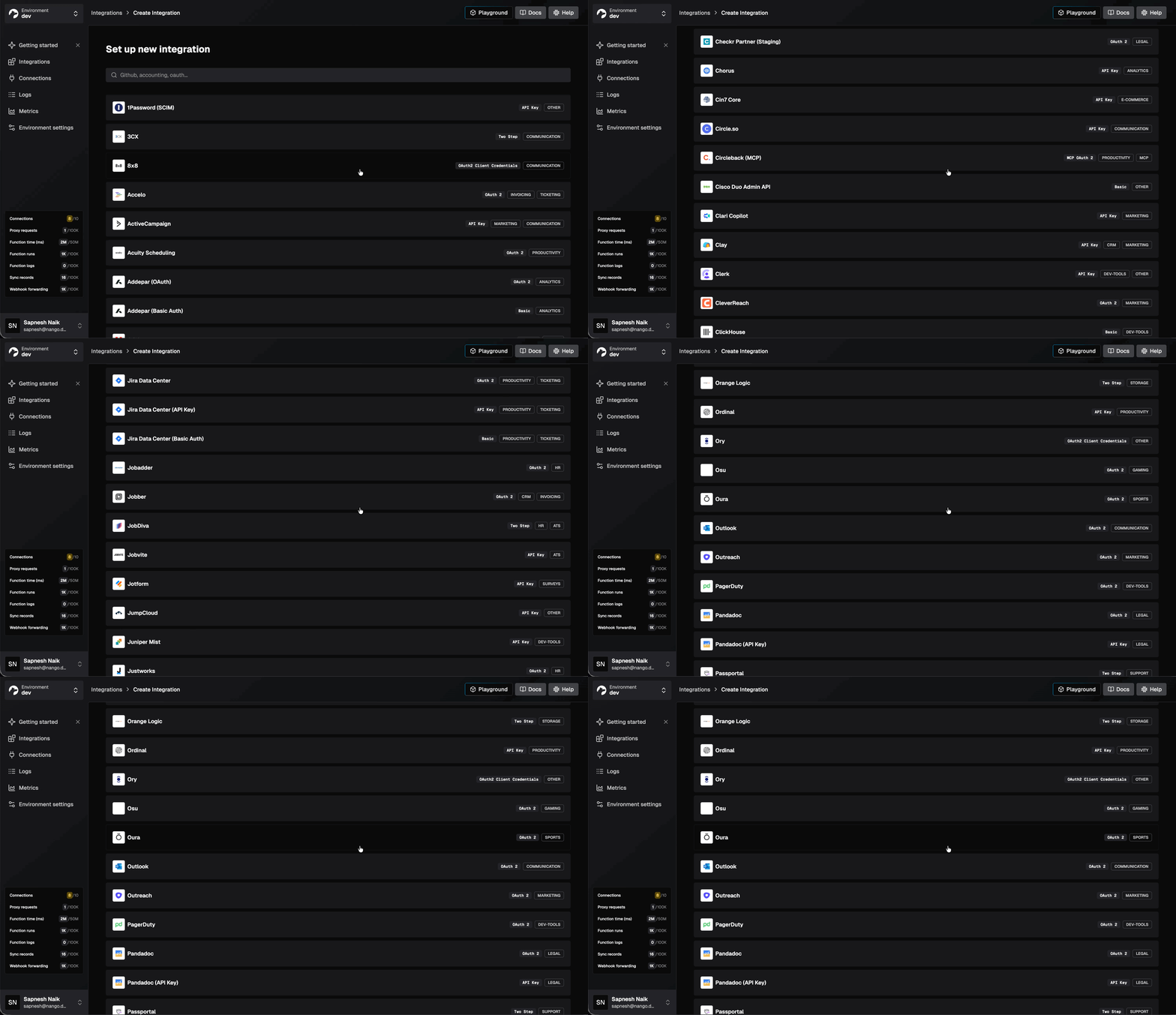
Nango is an open-source agentic API integration platform. Coding agents can build API integrations on it, and the AI agents in your product call those integrations at runtime. Nango supports 1,000+ APIs out of the box and is used as core infrastructure by hundreds of fast-growing AI companies.
With Nango, you authenticate with each API once, then run Syncs, Actions, and Webhooks defined as code functions. The Nango AI builder skill gives 18+ coding agents the context to research an API, write the integration, test it against a real connection, and ship.
Best for
Production applications that want coding agents to build and ship new API integrations on demand.
Pros
- Universal AI builder skill: Works with any coding agent (Claude Code, Cursor, Codex, and others). One install command gives the agent the context to research an API, write the integration, test it against a real connection, and iterate on real errors.

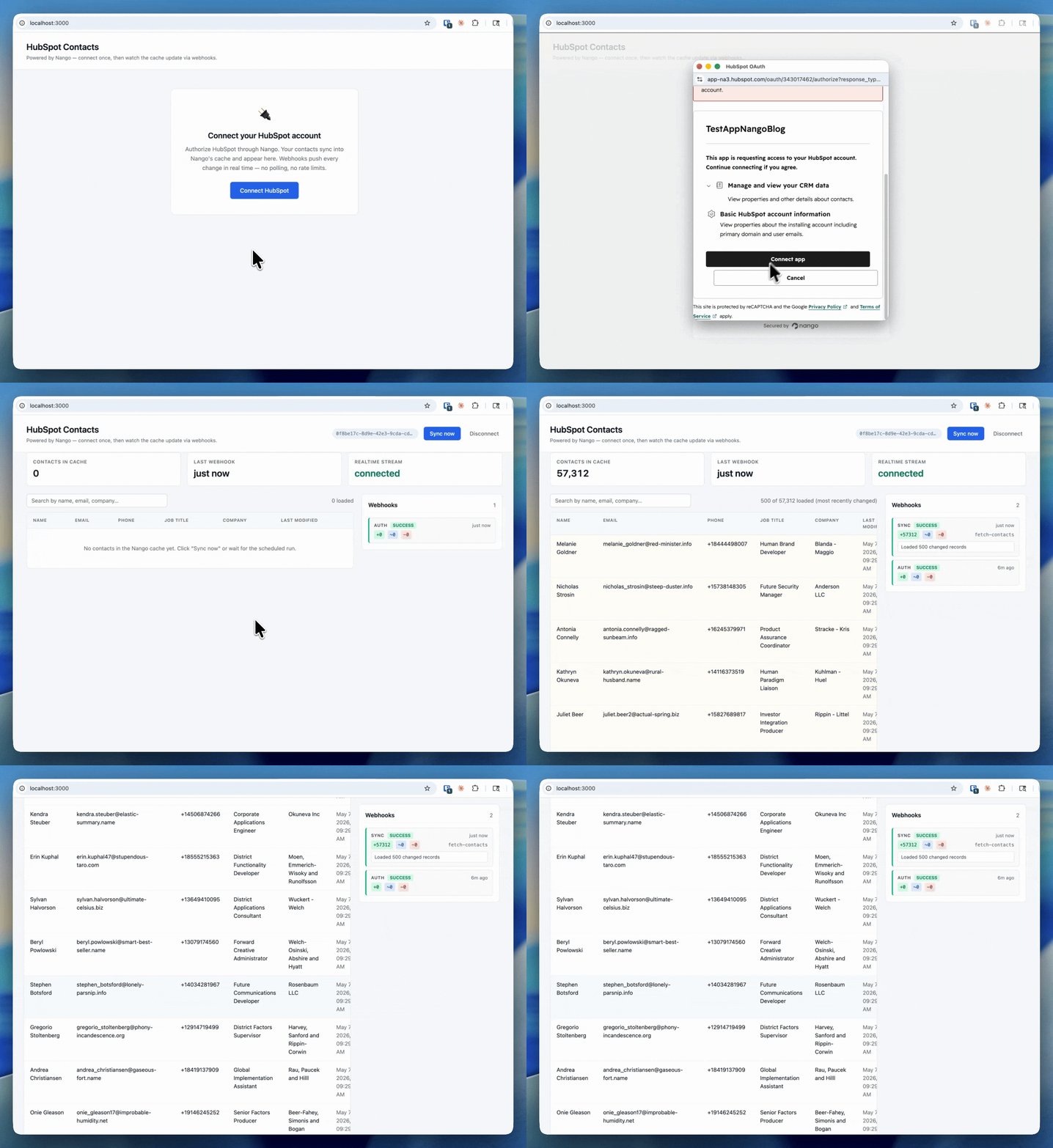
- See the walkthroughs of building a real-time Google Calendar integration and syncing large amounts of contacts from the HubSpot API end-to-end. The full setup is in the Nango functions guide.
- Built-in MCP server and typed tool calls: Every action is exposed as a deterministic tool call through both REST and the MCP server.
- Native, durable data syncs: Syncs are a first-class primitive. Define what to fetch and how often; Nango handles pagination, incremental updates, change detection, and deduplication. Syncs resume cleanly across millions of records after a failure. Real-time and 2-way syncs are supported.
- Real-time triggers via webhooks: Nango ingests provider webhooks, routes each event to the right connection, and lets your app or AI agent react. The infrastructure auto-scales under bursts and processes billions of API requests per month.
- White-label auth across 1,000+ APIs: A drop-in UI component handles OAuth, API keys, JWT, basic auth, and MCP Auth. End users authorize under your brand.
- Tenant-isolated runtime: Tool calls add less than 100ms of overhead. The serverless runtime isolates each customer, so one heavy sync does not degrade performance for others.
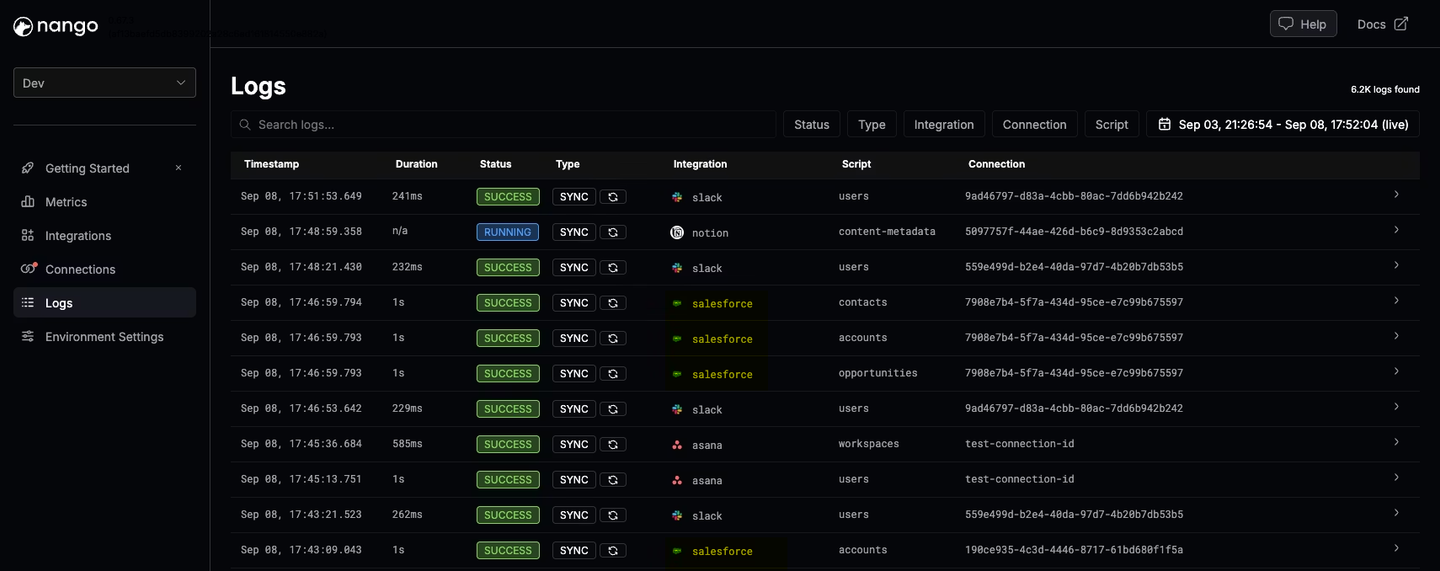
- Real-time observability with OpenTelemetry: Every operation produces structured logs with full request and response details, custom log messages, and full-text search. Logs export through OpenTelemetry, so a coding agent can read a failing run and ship a fix on its own.
- Role-based access control: Control who on your team can edit, deploy, or manage integrations. You can also generate narrow-scoped API keys for use when a coding agent is building integrations, which limits the agent’s access surface.
- Enterprise compliance and hosting: SOC 2 Type II, GDPR, HIPAA. Self-hosting is available for teams that need full data isolation.
2. Prismatic
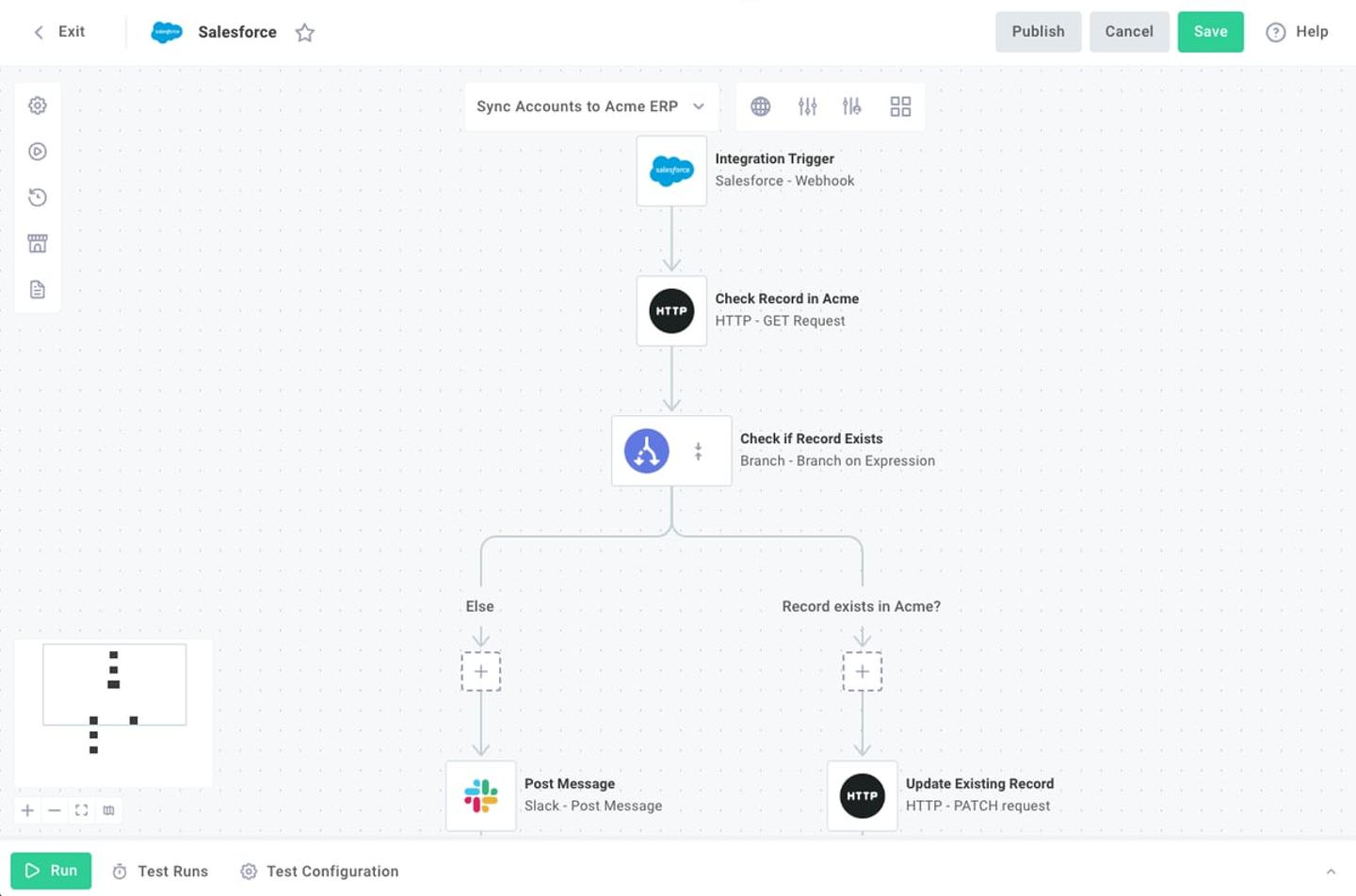
Prismatic is an embedded iPaaS that provides a low-code visual workflow builder alongside a code-based SDK, and offers a white-label integration marketplace you can embed in your product.
Best for
Teams that want a low-code visual workflow builder for non-technical operators, with Claude Code support to scaffold those workflows for engineers.
Pros
- Visual workflow builder for end users: A low-code builder you can embed in your product, so end users can configure simple workflows themselves.
- MCP server for runtime consumption: Exposes Prismatic workflows as MCP tools, so AI agents in your product can call them.
- Claude Code skill (released May 2026): A plugin that lets Claude Code set up workflows for you in Prismatic.
Cons
- No just-in-time integrations: Prismatic’s skills are developer productivity tools for engineers building Prismatic workflows from their IDE. There is no path where a coding agent ships a new integration and an AI agent in your product calls it at runtime.
- Skill only works with Claude Code: Cursor, Codex, Gemini CLI, and OpenCode are not supported.
- Limited runtime: Per-workflow execution caps prevent large enterprise backfills and high-volume webhook bursts.
- Smaller connector catalog: Around 190 connectors today. Custom components can be built through the platform, but the maintained breadth is a fraction of Nango’s 1,000+.
- Not open source: The integration runtime, connector catalog, and pre-built connectors are not open source.
Other embedded iPaaS in this category
Workato Embedded and Pipedream Connect also show up in buying conversations. Both ship MCP servers in 2026 that expose pre-built workflows or connectors to AI agents at runtime. Neither ships a coding-agent skill that builds new integrations on the platform, so they do not support just-in-time integrations today.
Why Workato Embedded does not support JIT
There is no coding-agent skill that lets Claude Code, Cursor, or Codex author and deploy a new Workato integration end-to-end. The build path is still humans in a low-code recipe builder. Workato’s MCP support exposes pre-built recipes for consumption, but cannot generate new integrations on demand. Webhook ingestion is also rate-limited, and Workato does not offer a durable data sync primitive for large backfills.
Why Pipedream Connect does not support JIT
There is no dedicated skill for Claude Code, Cursor, or Codex to author and deploy new Pipedream components. Custom components are still written by humans in Pipedream’s web editor, and there is no native data sync primitive for keeping agent context fresh across large datasets. For a deeper look, see Pipedream Connect alternatives.
Comparison of embedded iPaaS for just-in-time integrations
| Capability | Nango | Prismatic | Workato Embedded | Pipedream Connect |
|---|---|---|---|---|
| Supports just-in-time integrations | Yes | No (Claude skills are for developer productivity, not runtime JIT) | No | No |
| Skill for coding agents to build integrations | Yes (18+ agents) | Yes (Claude Code only) | No | No |
| Tests built integration against real API | Yes | Yes | No | No |
| MCP server at runtime | Yes | Yes | Yes | Yes |
| Durable data syncs | Yes | No | No | No |
| Webhook ingestion at scale | Yes | Limited | Limited | Limited |
| White-label drop-in auth UI | Yes | Yes | Yes | Yes |
| Open-source platform | Yes | No | No | No |
| OpenTelemetry export | Yes | No | No | No |
| Supported APIs | 1,000+ | Around 190 | 1,200+ | 3,000+ |
| Primary focus | Build and run integrations with AI | Low-code workflows with Claude Code scaffolding | Pre-built recipes exposed to agents over MCP | Pre-built tool catalog exposed over MCP |
How we evaluated these platforms
We assessed each embedded iPaaS across six dimensions tied directly to just-in-time integrations:
- Skill for coding agents to build integrations: Does the platform ship a skill or harness that lets a coding agent author, test against a real API, and deploy a new integration?
- Coding-agent compatibility: Does the skill work with Claude Code, Cursor, Codex, Gemini CLI, OpenCode, and others, or just one?
- Runtime consumption by AI agents: Does the platform expose integrations as typed tool calls, an MCP server, webhooks, and data syncs?
- Scale: Can the platform handle webhook bursts and large enterprise syncs without degrading per-tenant performance?
- Auth coverage: OAuth, API keys, JWT, basic auth, and MCP Auth.
- Observability: Are there structured logs, OpenTelemetry export, and detailed error traces, so a coding agent can read a failure and ship a fix?
FAQ: Embedded iPaaS for just-in-time API integrations
Which embedded iPaaS actually support just-in-time API integrations today?
Only Nango supports it end-to-end. Prismatic’s Claude skills are designed for engineers building Prismatic integrations faster from their IDE, as an alternative to its low-code UI, not for a hands-free runtime workflow where a coding agent picks up a customer request, builds the integration, and deploys it for immediate consumption. Workato Embedded and Pipedream Connect ship no coding-agent skill at all, so they cannot generate new integrations on demand either.
How are just-in-time integrations different from traditional embedded iPaaS?
Traditional embedded iPaaS require a human to build each integration in a visual editor or by hand. JIT replaces that step with a coding agent that writes the integration code, tests it, and deploys it. The result is reviewable code that can be regenerated when an API changes. Traditional integrations are stuck in the vendor’s UI and can only be edited by another human.
Do just-in-time integrations work with Cursor, Codex, and Gemini CLI?
On Nango, yes. The Nango AI builder skill supports 18+ coding agents out of the box, including Cursor, Codex, Gemini CLI, OpenCode, and GitHub Copilot. The agent matters less than the platform and the skill backing it; see using AI coding agents for building API integrations for the full comparison.
Can a coding agent test integrations against the real API without leaking customer data?
Yes. With Nango, the agent runs nango dryrun against a sandbox or developer connection, returns real API responses, and iterates on real errors. Production tokens are not exposed to the agent. You can also issue a narrow-scoped API key for the agent so the build surface is isolated from the production runtime.
Which embedded iPaaS scales to millions of webhook events and large enterprise syncs?
Nango is the only platform in this comparison built for this. Its infrastructure processes billions of API requests per month, ingests webhooks at high throughput, and uses durable syncs to resume across millions of records. The other platforms have per-workflow execution caps and rate-limited webhook ingestion that block this scale.
Can I migrate away from an embedded iPaaS later?
It depends on the platform. With Nango, integrations are code in your repo, your customers authorize your app directly, and you retain access to all tokens and credentials. Other embedded iPaaS often force customers to authorize the vendor, integration logic lives in a proprietary builder, and you cannot inspect or export the underlying code. Plan for migration cost when evaluating those platforms.
Conclusion
Just-in-time API integrations are a new category, not a feature retrofitted onto existing embedded iPaaS. The work shifts from building each integration manually to building the factory that generates them. The right platform should give you that factory.
Today, only Nango supports the full JIT loop. Coding agents build and maintain integrations through the AI builder skill, testing generated code against real provider APIs end-to-end. The AI agents inside your product consume those integrations through an MCP server, typed tool calls, webhooks, and durable data syncs.
If you want to try the Nango AI builder skill with your favorite coding agent, follow the Nango functions guide to get started.
Related reading
- The emergence of just-in-time integrations
- Best agentic API integrations platform in 2026
- Best API integration platforms to use with Claude Code, Cursor, and Codex (2026)
- Best embedded iPaaS for scalability and flexibility in 2026
- Best embedded iPaaS platforms for product integrations in 2026
- Pipedream Connect alternatives
- Using AI coding agents for building API integrations in 2026
- How is Nango different from embedded iPaaS or other unified APIs?

