
TL;DR
This guide compares the best unified API platforms for HR systems in 2026. It is for engineers who add HRIS, ATS, and payroll integrations to a SaaS product, or who give an AI agent scoped access to their customers’ Workday, ADP, Gusto, or Greenhouse data.
Nango fits the most use cases as it’s a single platform that covers HR, ATS, payroll, and 1,000+ other APIs. It has tools that agents can call, and you control every integration in code. Each of the other five fits a narrower niche.
The platforms compared:
- Nango: The broadest option. HR, ATS, and payroll integrations sit next to 1,000+ APIs. About 300 HR, ATS, and hiring actions are live for agents, syncs run as often as every 30 seconds on every plan, and you can customize any integration in code.
- Merge: Pre-normalized HRIS and ATS model for reading standard data. Custom fields, passthrough, and faster syncs need a Professional or Enterprise contract, and agent tooling is a separate product.
- Finch: A US payroll and benefits specialist with deduction and 401(k) write-back. It covers HR and payroll only, and most providers are assisted connections that refresh every 7 days.
- Kombo: A European people-data API with deep HR coverage and broad ATS writes. It has no tool layer for agents, and every unified read waits on Kombo’s copy of the data.
- Apideck: An accounting-first, pass-through unified API with basic HRIS coverage for SMB and European tools. Enterprise HCM and payroll depth is thin, and HR changes are polled every 24 hours by default.
- Knit: A managed, HR-first API with a strong APAC and staffing long tail. HRIS changes arrive by polling, daily on the entry plan, and there is no self-hosted option.
Why use a unified API for HRIS, ATS, and payroll integrations
Your customers don’t share one HR stack. One runs Workday, another runs ADP, and a third uses Gusto with Greenhouse. Each new deal can add another HRIS integration your team has to build and maintain. A unified API gives you one integration layer across all of them.
- Fragmented providers: HRIS, ATS, and payroll are crowded categories. Each provider has its own data model, pagination, and rate limits. Each new provider means new auth, mapping and maintenance work.
- Hard enterprise auth: Workday uses Integration System Users (ISU) and OAuth. ADP requires mTLS certificates. SuccessFactors and Dayforce have their own token flows. Getting auth right for each provider is a project in itself.
- Data freshness: Payroll, onboarding, and access provisioning go wrong when employee data is stale. You need syncs, change webhooks, and deletion detection to keep your copy current.
- Sensitive PII: HR records include SSNs, bank details, and compensation. Your customers’ security teams will ask where that data is stored, logged, and processed.
- Scoped access for agents: An agent that answers “who reports to Dana?” shouldn’t be able to read salaries. Agent tools over HR data need scoping per customer and per tool.
How to evaluate a unified API platform for HRIS, ATS, and payroll integrations
We scored each platform on the questions that decide whether an in-product HR integration holds up in production:
- Coverage depth per provider: Count supported operations per provider. Check Workday, ADP, Rippling, BambooHR, Gusto, and Greenhouse one by one, and see whether each connector is API-based or assisted (run manually by the vendor’s ops team).
- Read and write support: Can you create and update employees, submit time off, move candidates, or write payroll deductions? Many common models are mostly read-only.
- Data freshness and sync model: How often does data refresh, and on which plan? Do you get change webhooks and deletion detection? Are reads live, or served from the vendor’s stored copy?
- Customization and raw API access: Can you map custom fields per customer, add your own models and endpoints, and call the provider’s raw API when the common model stops short?
- Auth ownership: Do customers authorize your app or the vendor’s? If the vendor owns the connection, every customer has to reconnect when you switch vendors.
- Agent readiness: Are there HR tools an agent can call? Is there an MCP server or SDK? Can you scope an agent to one customer and a set of tools?
- Data handling and deployment: Where is PII stored and logged? Can you self-host or run in your own cloud? Which certifications apply?
- Pricing as you scale: What does each connection or linked account cost, and which features are locked behind sales-led tiers?
- Breadth beyond HR: Will you need CRM, accounting, or messaging integrations next? A platform that covers every category saves you from adding a second vendor.
The best unified APIs for HRIS, ATS, and payroll integrations in 2026
The six platforms below start with the broadest. Each one lists what it is best for, with pros and cons measured against the criteria above.
1. Nango
Overview
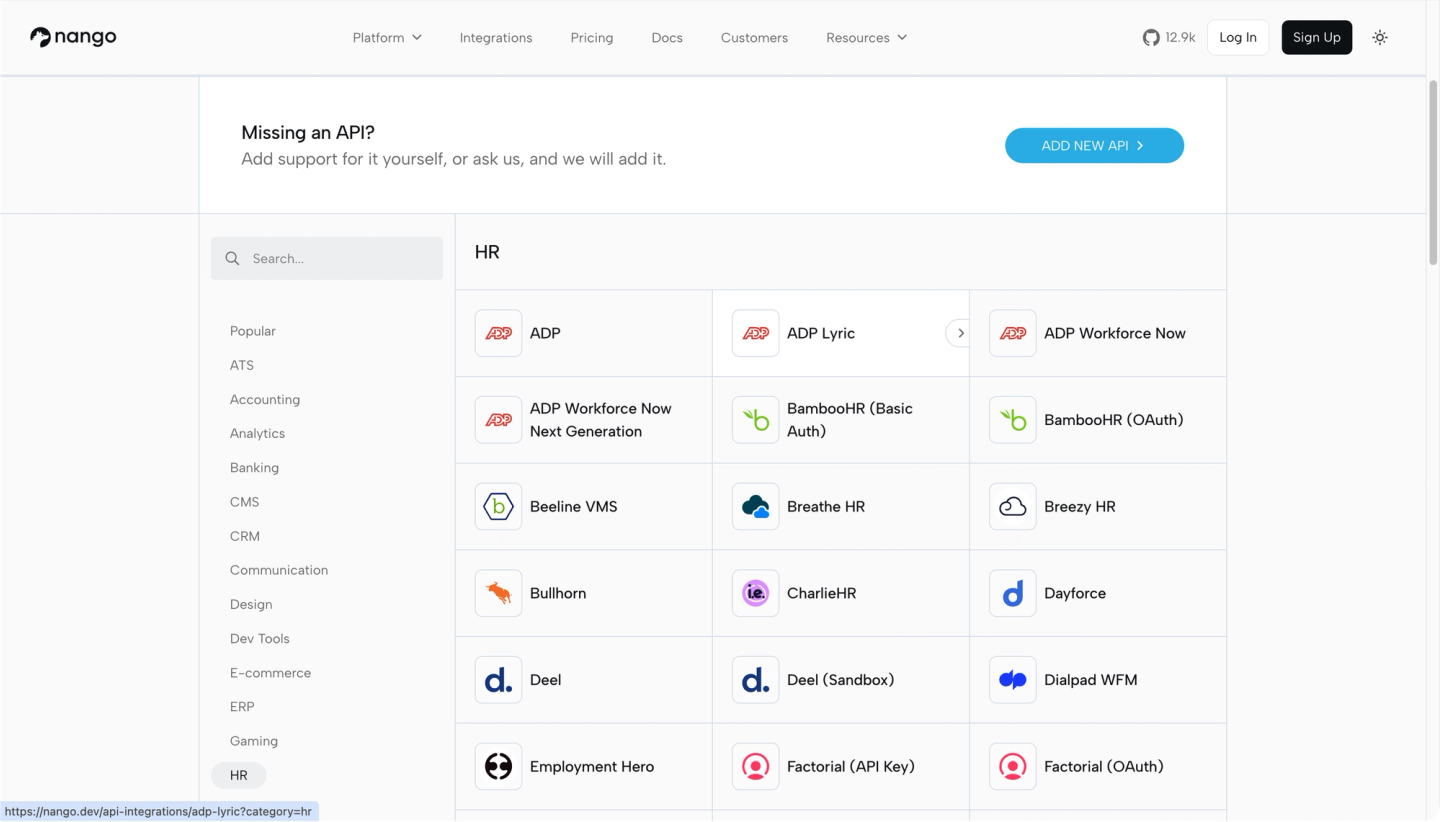
Nango connects AI agents and SaaS products to 1,000+ APIs. It ships 10,000+ pre-built tools and covers auth, tool calls, triggers and syncs. Its HR catalog spans enterprise HCMs and payroll systems, from Workday, ADP, UKG, SAP SuccessFactors and Oracle HCM to Gusto, Rippling, Deel, Greenhouse, Lever and Ashby. About 440 pre-built syncs and actions cover 24 HR, ATS and hiring tools.
Best for
Any HR, ATS or payroll integration for your agent or product, alongside 1,000+ other APIs. Customize it in code and run it in your own cloud.
Pros
- HR, ATS and payroll next to everything else: HR connectors sit beside CRM, accounting, Slack and calendar. You get one auth flow, one sync model and one bill, with no per-category plans. Start free with 10 connections, then pay as you go from $50/month at $0.29 per connection.
- HR tools agents can call on day one: About 300 HR, ATS and hiring catalog actions are live by default, with no deploy step. Nango maintains them. Examples: create and update employees (Gusto, BambooHR), submit time off (Workday, BambooHR), and move candidates between stages (Lever, Workable, Ashby).
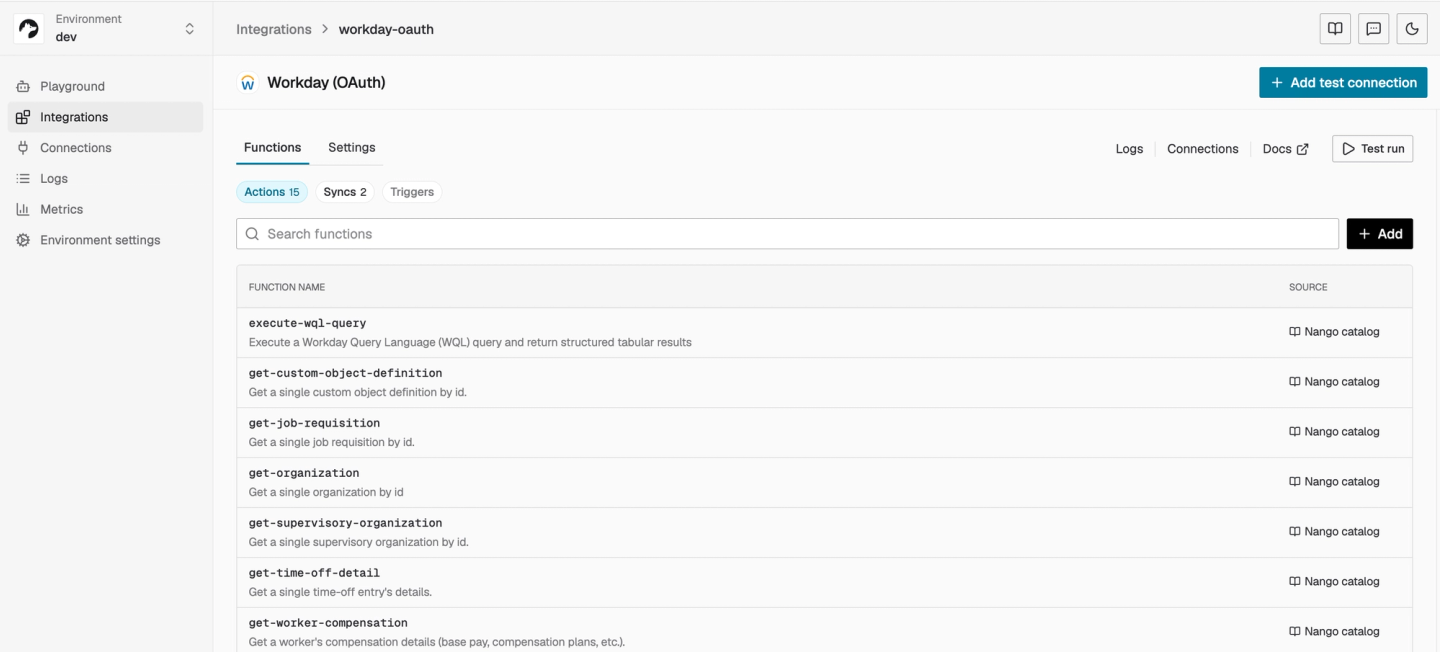
- Your HR data model, per customer, in code: Integrations are TypeScript functions you own. A starter employee model already covers 10 HRIS and payroll systems, including ADP, Gusto, HiBob, Oracle HCM, Paycom, SuccessFactors and UKG. Store each customer’s custom-field mappings in connection metadata. Claude Code, Cursor or Codex can extend any function with Nango’s skills.
- Drop down to the raw API at any time: When a pre-built tool stops short, the proxy reaches any endpoint the provider exposes, including Workday SOAP and WQL. Add a missing deduction write or custom report yourself instead of waiting on a vendor roadmap.
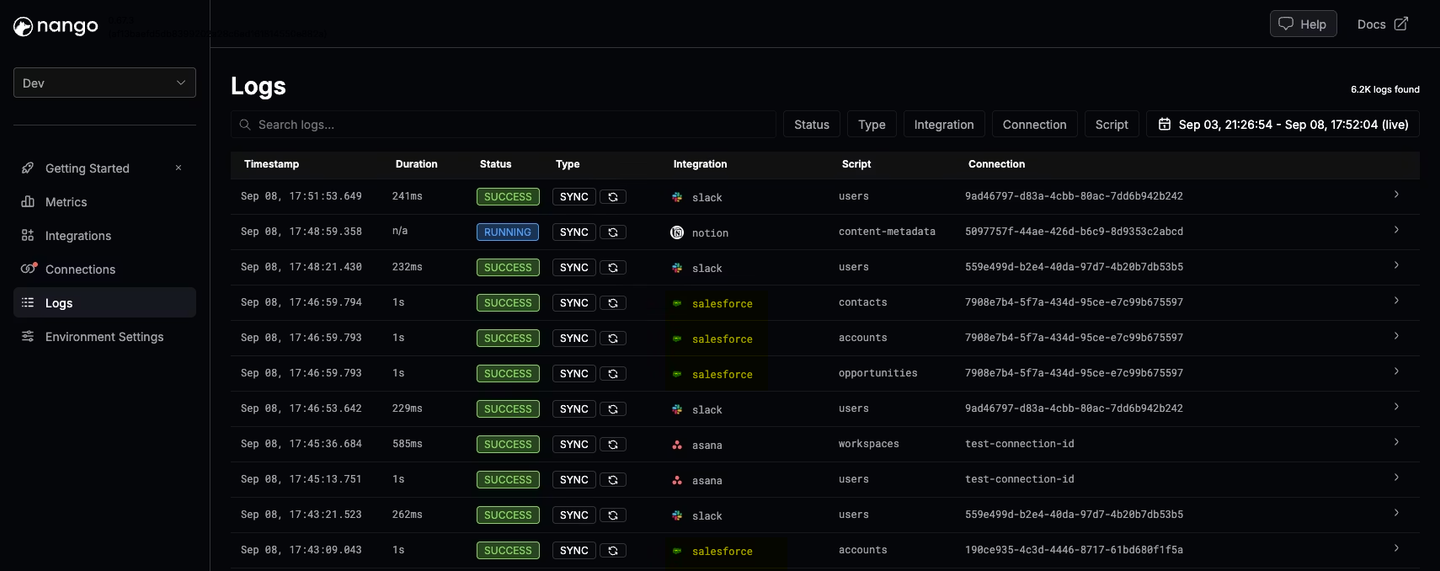
- Fresh employee data on any plan: Syncs run as often as every 30 seconds on every plan, and you can override the frequency per customer. Checkpoints, deletion detection and webhooks to your backend keep your copy current. Actions read live data when an agent needs it now.
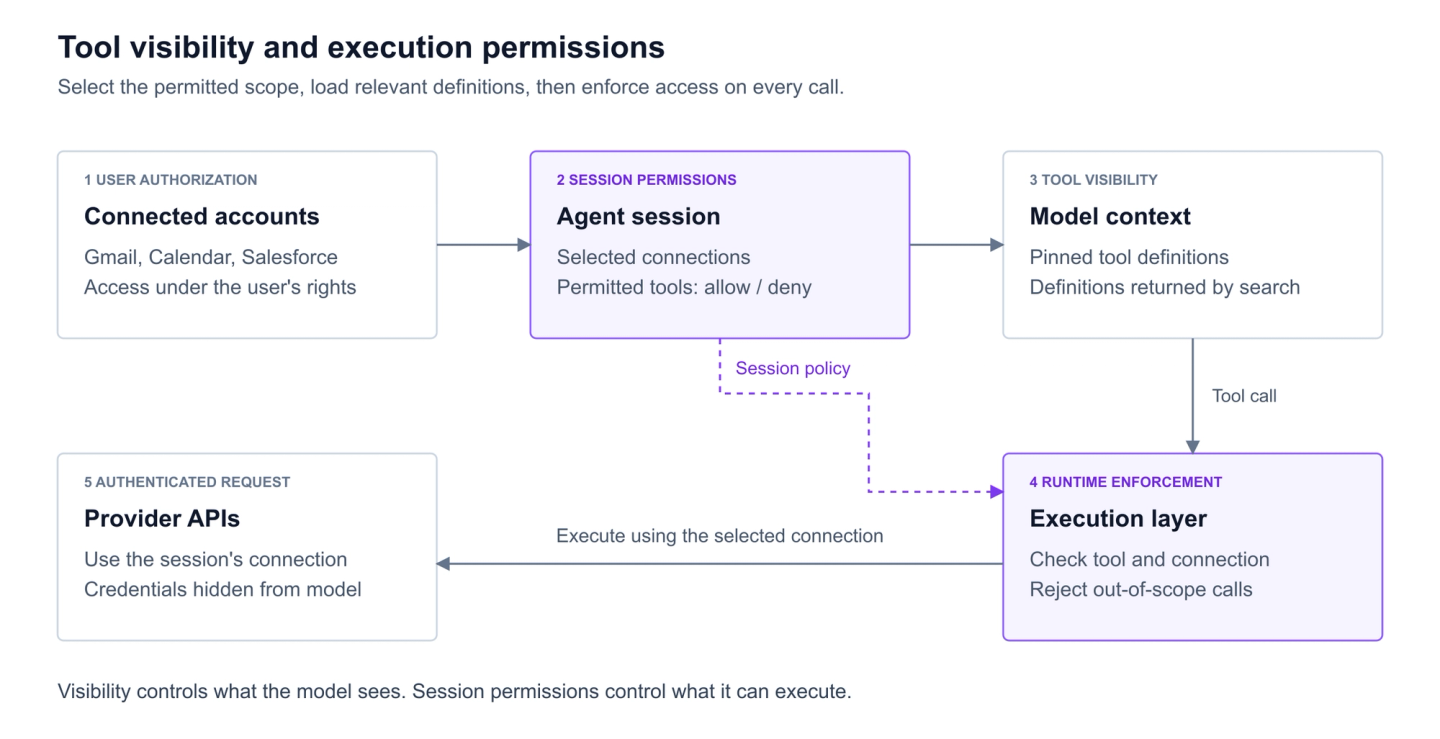
- Scoped agent access to sensitive HR data: An Agent Session pins one customer’s connections and an allowlist of tools, for example the org chart but not compensation. The agent never sees credentials and can’t widen its own scope.
- Enterprise HR auth, under your own vendor credentials: Nango handles ADP mTLS certificates, Workday ISU and OAuth, and SuccessFactors and Dayforce token flows. Customers authorize your app. If you leave, you export the tokens and nobody reconnects.
- Keep employee PII in your own cloud: BYOC and self-managed deployment (Enterprise) keep credentials, synced records and logs in your AWS, GCP or Azure account. Nango is SOC 2 Type II, GDPR and HIPAA compliant, with a BAA available.
Cons
- You own the shared schema beyond employees: Candidates, time off and payroll have no pre-built shared model. Your team defines one and reviews each provider’s mapping, and coding agents do most of the work.
- Payroll and long-tail HR tools need building: Payroll tools (pay statements, deductions) aren’t in the catalog yet. Rippling, Deel, Personio, Dayforce and Paychex are auth and proxy only today. You build what you need as functions, or request a new API (2 to 20 days by plan).
2. Merge
Overview
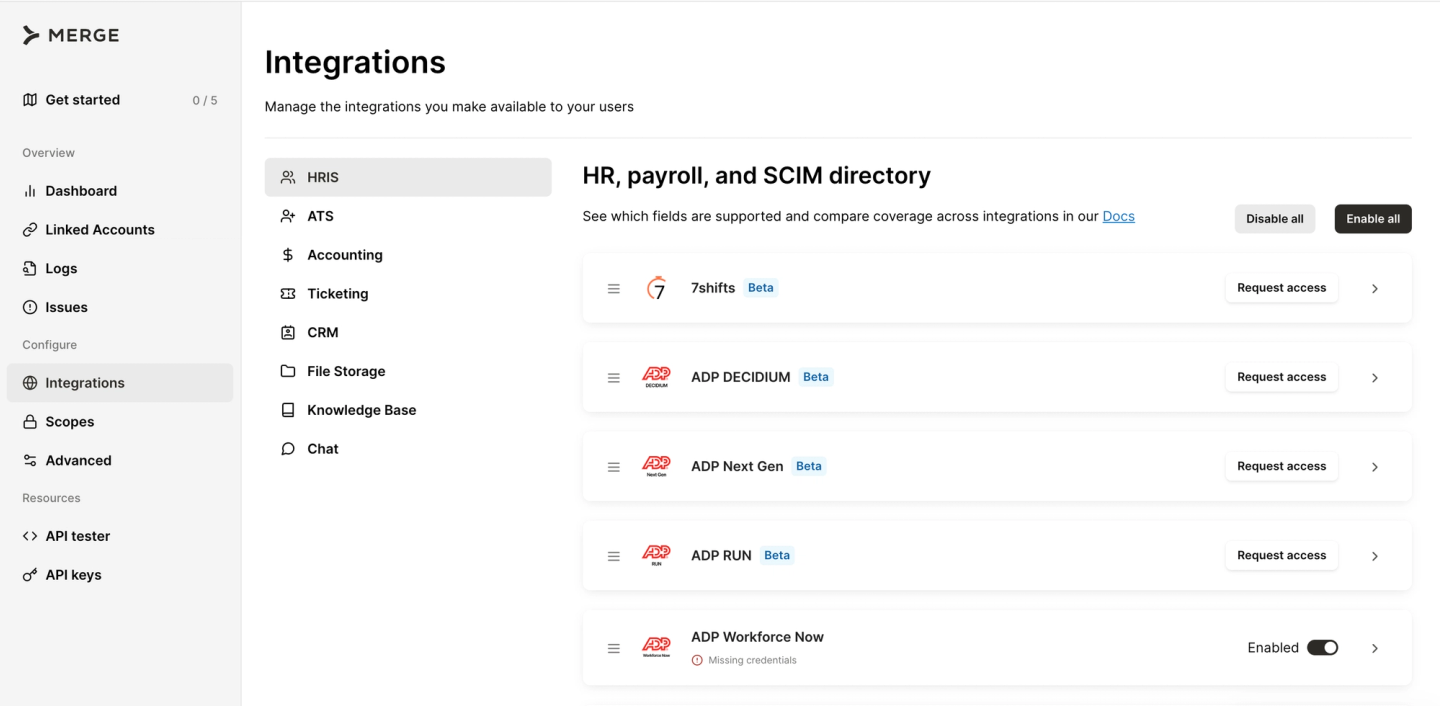
Merge is a well-known classic unified API. Merge Unified normalizes 8 categories across 260+ documented integrations, including 87 HRIS integrations (8 of them identity or file connectors) and 63 ATS integrations. Its HRIS common model spans 15 objects, from employees to payroll runs and benefits. Agent tooling is a separate product, Merge Agent Handler.
Best for
SaaS teams that want a vendor-maintained, pre-normalized model for reading standard employee and candidate data, on a sales-led contract.
Pros
- Mature pre-built HR and ATS data model: 15 HRIS models cover employees, employments, pay groups, payroll runs, benefits, time off, timesheets, bank info and dependents. The ATS side covers candidates, applications, interviews, scorecards, offers and jobs.
- Wide HRIS and ATS catalog: It includes Workday, ADP, UKG, Dayforce, SAP SuccessFactors, Oracle HCM, Greenhouse, Lever and iCIMS, with provider fixes shipped weekly.
- Strong compliance and hosted residency: Merge holds SOC 2 Type II, ISO 27001, GDPR and HIPAA, and offers hosting in the US, EU or APAC.
- Sync basics on every plan: Even the Launch plan includes webhooks, native deleted-data detection, linked-account issue detection and 3 free production accounts.
Cons
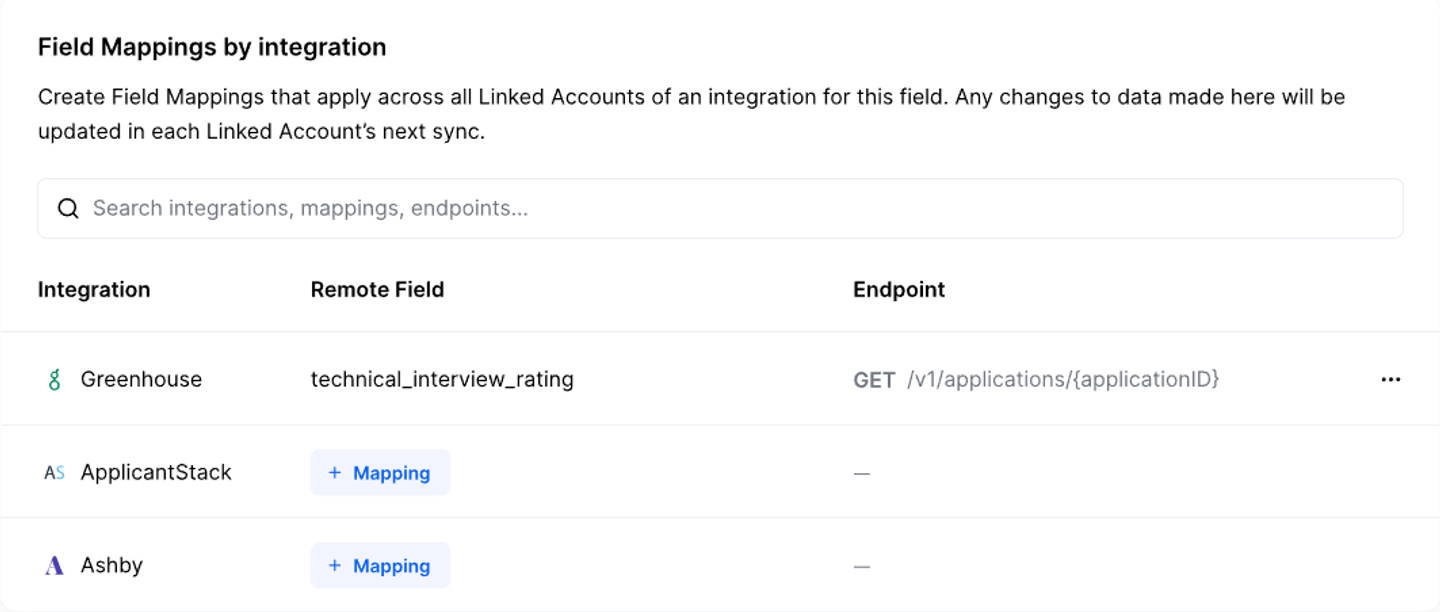
- The features HR integrations depend on need a sales contract: Custom fields, Remote Data, Field Mapping, Authenticated Passthrough, third-party webhooks, custom sync frequency and beta integrations all require Professional or Enterprise. The betas include SAP SuccessFactors, Oracle HCM, Paycom and ADP RUN. The self-serve Launch plan gets the common model, synced daily.
- Cost climbs quickly as customers connect: After 3 free production Linked Accounts, self-serve is $650/month for up to 10, then $65 per Linked Account per month. Volume discounts need a contract. A product that connects one HRIS and one ATS per customer pays for two accounts per customer.
- Few writes in the common model: In HRIS you can create an employee, a time-off request or a timesheet entry. You cannot update or terminate an employee, and benefits, compensation and payroll runs are read-only. In ATS, offers, jobs and scorecards are read-only. Anything else goes through Passthrough (Professional and up), in each provider’s own format.
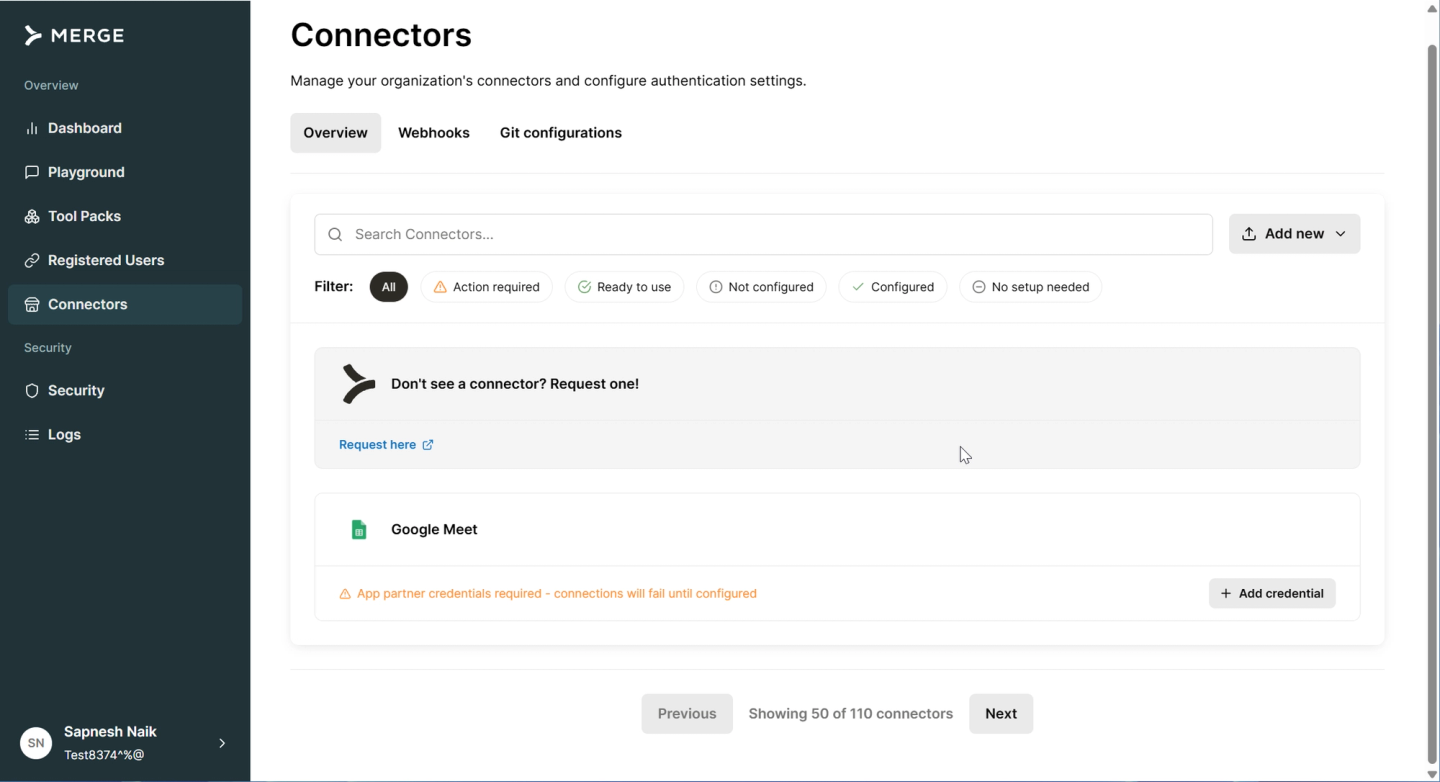
- Agents and synced data are two separate products:
- Agent Handler has its own dashboard, identity model and credit billing. Pro is $1,000/month for 25,000 credits, and failed calls count.
- It has no syncs. Its HR catalog has no ADP, Gusto, Rippling, Paychex or Lever connector, and adding a missing tool means hosting your own public MCP server.
- The MCP server for synced Unified data is a single-account local process, last updated in April 2025.
- You can’t change how integrations work: You can’t add common models, endpoints or providers. Launch customers can’t request new integrations. Custom Objects are documented for CRM only, not HRIS or ATS.
For a deeper comparison, see Merge.dev vs Nango.
3. Finch
Overview
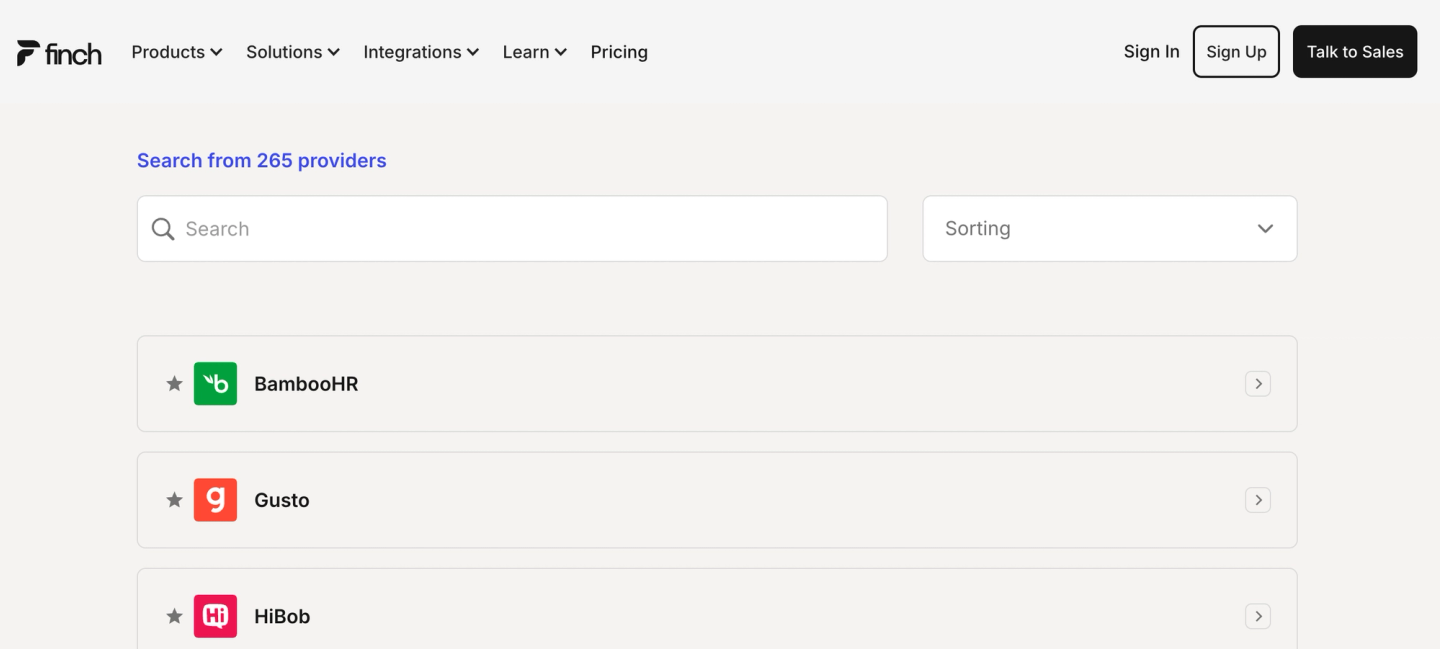
Finch is a US-focused unified employment API for HRIS and payroll. It reports 120,000 employers connected and 16.8M employee records synced (Feb 2026), and markets 250+ providers. Its differentiator is writing 401(k), HSA, FSA and Section 125 deductions back to payroll.
Best for
US benefits, 401(k) and payroll-fintech products that need pay-statement data and deduction write-back, and can work with daily or weekly data.
Pros
- Payroll-specific data model: Finch normalizes pay statements down to line items (earnings, taxes, employee deductions, employer contributions), plus pay groups and payments.
- Deduction and contribution write-back: You can create deductions, enroll employees and set an employer match (fixed, percent or tiered). Finch reports $14B in deductions and contributions handled.
- Reaches small US payroll bureaus: Assisted integrations, run by Finch’s ops team through an admin user, cover regional payroll systems that most API-based platforms can’t reach. They require Pro or Premier.
- Proven at scale in its niche: 120,000 employers are connected, and G2 named Finch a Leader in Unified APIs (Winter 2026 Grid).
Cons
- Self-serve stops at a read-only plan: The free sandbox runs on mock data. The self-serve Starter plan costs $65 per connection per month, is read-only, and caps you at 15 connections and 24 providers. All 250+ providers, deduction writes and volume discounts need a Pro or Premier contract through sales.
- HR and payroll only, and US-focused: Every listed provider is an HR or payroll system. There is no candidate, job or application model. Finch’s own 2026 comparison post says it has no ATS, CRM or accounting and is primarily US-focused.
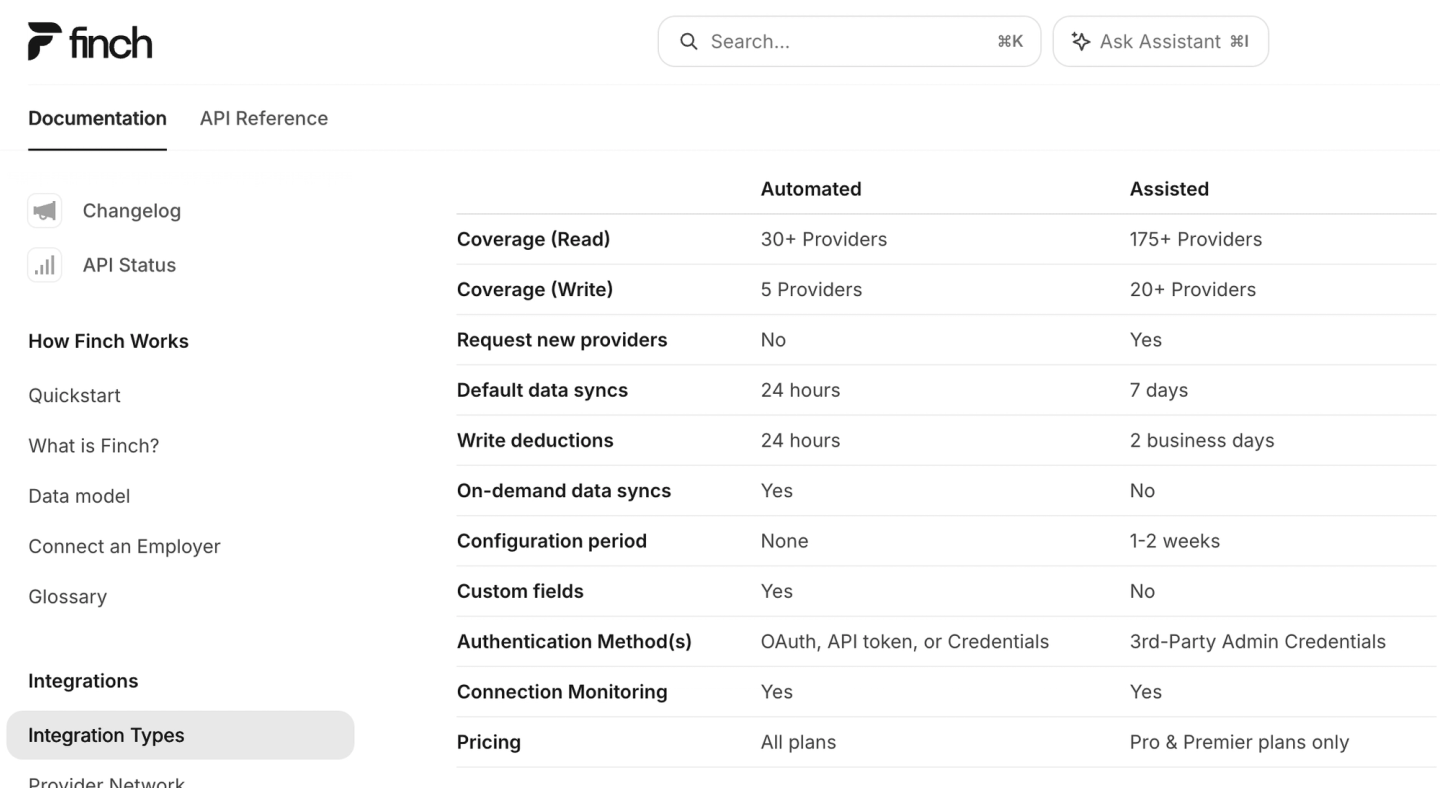
- Most coverage is assisted, and data is hours to a week old: Finch’s docs list 30+ automated providers and 175+ assisted ones. Those connections refresh every 7 days, take 1-2 weeks to set up, and send no change webhooks. Automated connections serve Finch’s stored copy, refreshed every 24 hours, with forced refreshes capped at one per hour.
- Employers authorize Finch, so the connection belongs to Finch: With OAuth, the employer authorizes Finch. Credential connections on ADP Workforce Now, ADP Run and Dayforce run on an admin login or a Finch-created admin user. If you switch vendors, every employer has to reconnect.
- Writes are deductions only: The unified API has no create or update employee, no time off and no onboarding writes. Automated writes cover 5 providers. Raw passthrough is Pro/Premier only and covers about 13 providers.
- Agent support is a beta, two-tool MCP on shared rate limits: It exposes docs search and a sandboxed code tool, with no curated HR actions, and you host it yourself. Rate limits are per application and shared across every employer: 20 requests/min for directory and individual data, 12/min for pay statements. One busy agent can throttle every other customer.
4. Kombo
Overview
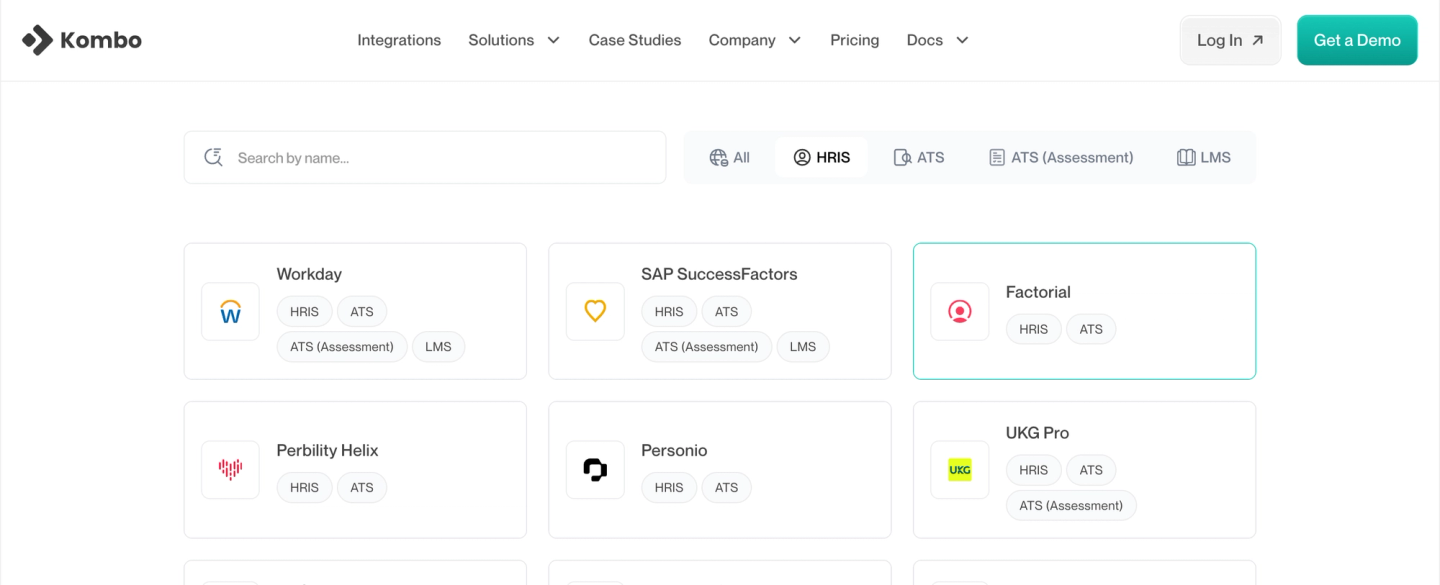
Kombo is a unified API for people data based in Berlin and New York. It covers HRIS and payroll, ATS, LMS and assessments. Its docs list about 100 HRIS/payroll and 120 ATS connectors (its marketing says 250+ integrations). It raised a $25M Series A in Feb 2026, serves 300+ customers, and serves every unified read from its own copy of customer data.
Best for
HR-tech and AI-recruiting products selling into Europe that want a pre-normalized people-data model and only need HR systems.
Pros
- Deep European HR and payroll coverage: It covers DATEV, SD Worx, Silae, Nmbrs, Loket, PayFit and Personio, plus Workday, SAP SuccessFactors, Oracle HCM and UKG.
- Broad ATS writes for recruiting tools: You can create candidates on 114 ATSs, move stages on 56, and write interviews, notes and screening results.
- Compliance built for people data: Kombo holds ISO 27001 and SOC 2 Type 2, and runs isolated EU, US and CA regions.
- Customer-facing setup tooling: An embeddable Connect flow lets your customers map their own custom fields, on every plan.
Cons
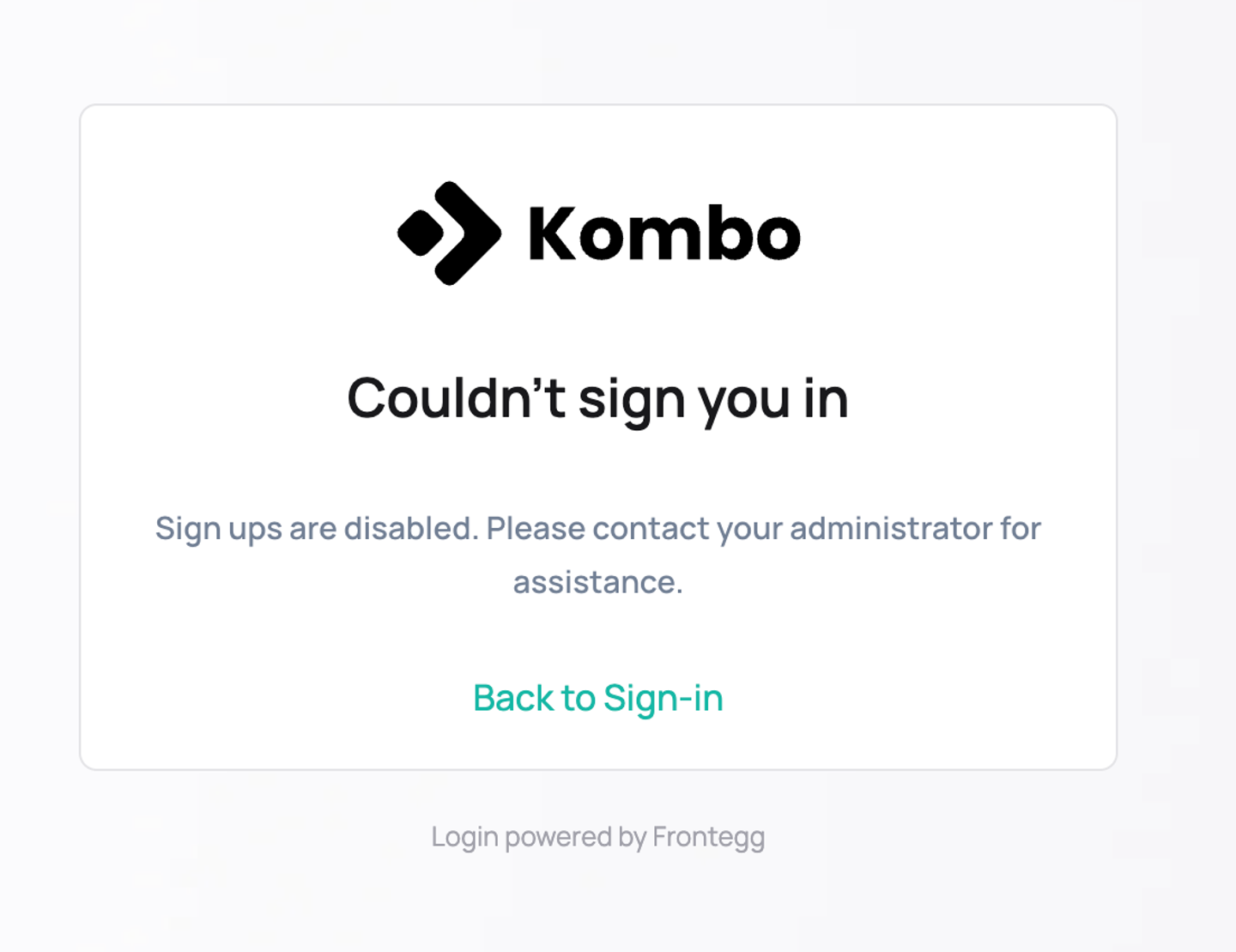
- No self-serve sign-up or public pricing: Every Kombo plan starts with a demo, and dashboard sign-ups are disabled. You can’t test against your own HR systems until sales sets you up, though Kombo offers a free proof-of-concept before you sign.
- No tool layer for agents: Kombo’s only MCP server is a read-only docs search that “does not use your Kombo API key”. It has no tools over customer HR data and no scoped agent access.
- Unified payroll is narrow and read-only: Pay runs and payslips cover Workday, UKG Pro, UKG Ready and Dayforce. There is no unified endpoint to write deductions or 401(k) contributions.
- Unified reads wait on Kombo’s mirror: Every unified read comes from Kombo’s copy of the data. A new connection returns SETUP_SYNC_PENDING until the first sync finishes, which “can take hours in some cases”. The mirror holds every in-scope field, including SSNs and bank accounts on ADP Workforce Now. No self-hosted or BYOC option is documented.
- Customization stops at the field level:
- Formula transforms are Enterprise-only, and you can’t add models, endpoints or write actions yourself.
- The model flattens multi-employment: ADP Workforce Now keeps only the primary employment, and Paycom only the current one.
- Raw
remote_datawas deprecated on Oct 11, 2026. - Anything else goes through passthrough, where Kombo adds auth but no normalization or sync.
- Key US payroll connectors and HR writes are still maturing: ADP Workforce Now and Dayforce are in open beta. Gusto and Rippling depend on Kombo’s partnership with each vendor. There is no ADP RUN or Justworks connector. Update Employee, Update Employment and Rehire are in closed beta.
5. Apideck
Overview
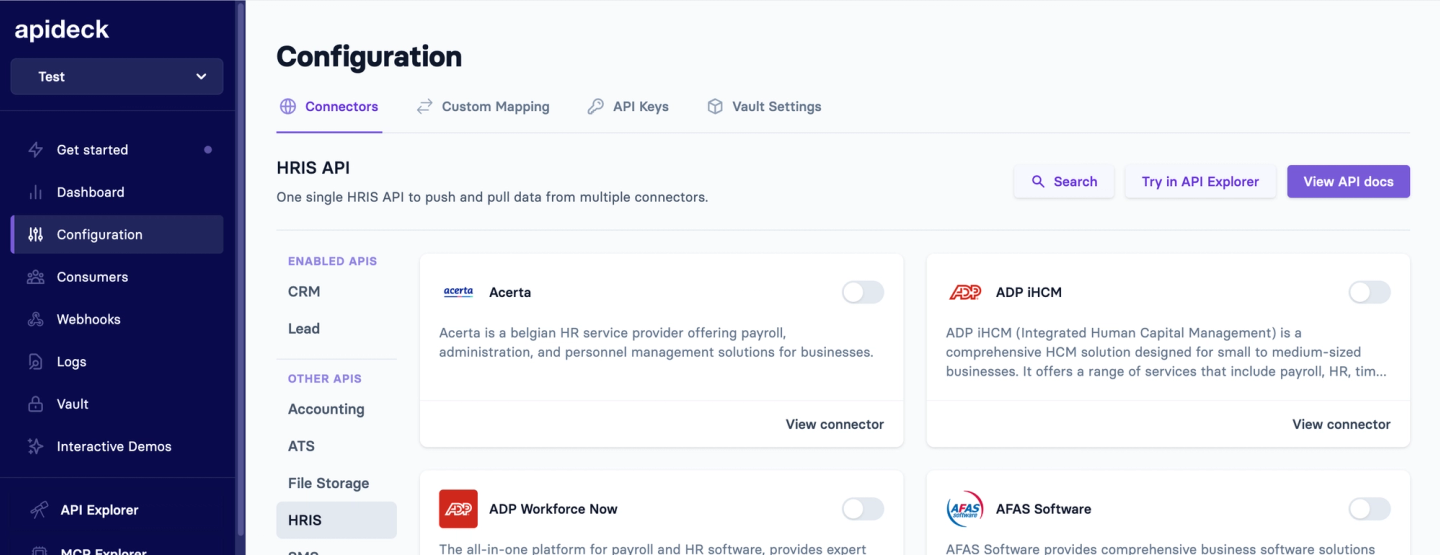
Apideck is a pass-through unified API that keeps no copy of business records, and its homepage leads with accounting. The HRIS API has 7 resources across about 60 connectors (5 of them identity directories). The ATS API has 3 resources across 10 connectors. A hosted, MIT-licensed MCP server launched in 2026.
Best for
Accounting-first vertical SaaS and fintech teams adding basic employee data from SMB and European HR tools as a second category.
Pros
- Good European and SMB HR coverage: It covers SD Worx, Personio, Factorial, Lucca, Loket.nl, Visma Nmbrs, AFAS and PayFit.
- Pass-through by design: Business records are “passed through without retaining a copy”.
- Field-level Data Scopes for PII: You can block fields like SSN or compensation per resource, and writes containing them are rejected. Available on Scale and above.
- Transparent pricing and an open MCP server: Plans start at $599/month with a 30-day trial. The MCP server is MIT-licensed, with read, write and destructive scopes.
Cons
- Payroll and enterprise HCM depth is thin: Only Gusto and Remote return payroll data, and it is read-only. Workday, Rippling and UKG Pro have no time-off or payroll resources, and ADP Workforce Now has no companies or departments.
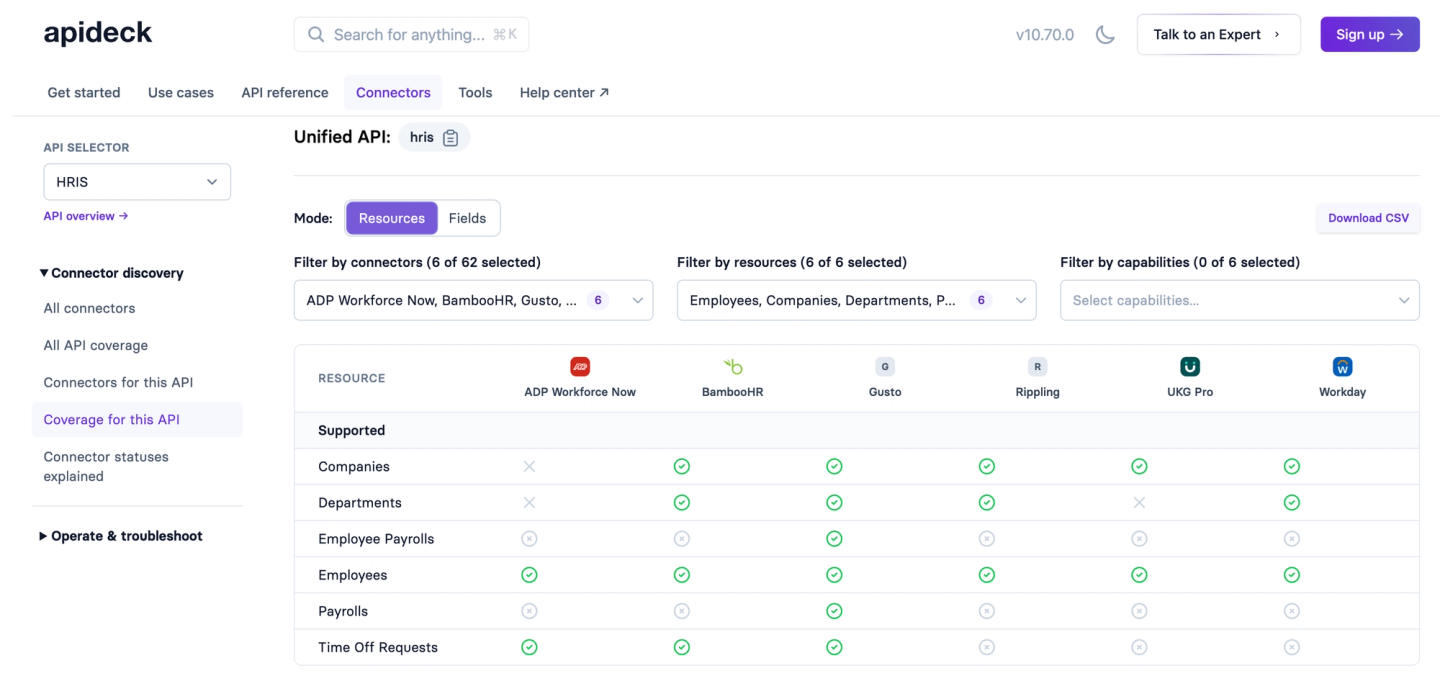
- HR change events arrive by polling, every 24 hours by default: Connector pages advertise real-time notifications, but HRIS and ATS webhooks are “virtual”. Apideck checks each resource every 24 hours by default. Faster intervals depend on plan settings it doesn’t publish.
- Thin ATS, and HR is not the focus: There are 10 ATS connectors and no Ashby, SmartRecruiters or iCIMS. Applications aren’t supported on Greenhouse, Lever or Workable, and there are no interview, scorecard or offer resources. Of about 25 connectors shipped in H1 2026, one was HRIS and one was ATS. Using HRIS and ATS together requires the $1,299/month Scale plan.
- HR payloads are logged by default: Logs capture full request and response bodies, including SSNs or compensation unless you mask those fields. Configurable retention is Enterprise-only. Apideck’s own comparison page lists no self-hosted or VPC option.
- Tenant isolation in the MCP server is opt-in: The consumer ID is optional, a per-call consumer ID overrides the header, and
lock_identityis off by default. One misconfiguration can point an agent at another customer’s employees.
For a deeper comparison, see Apideck vs Nango.
6. Knit
Overview
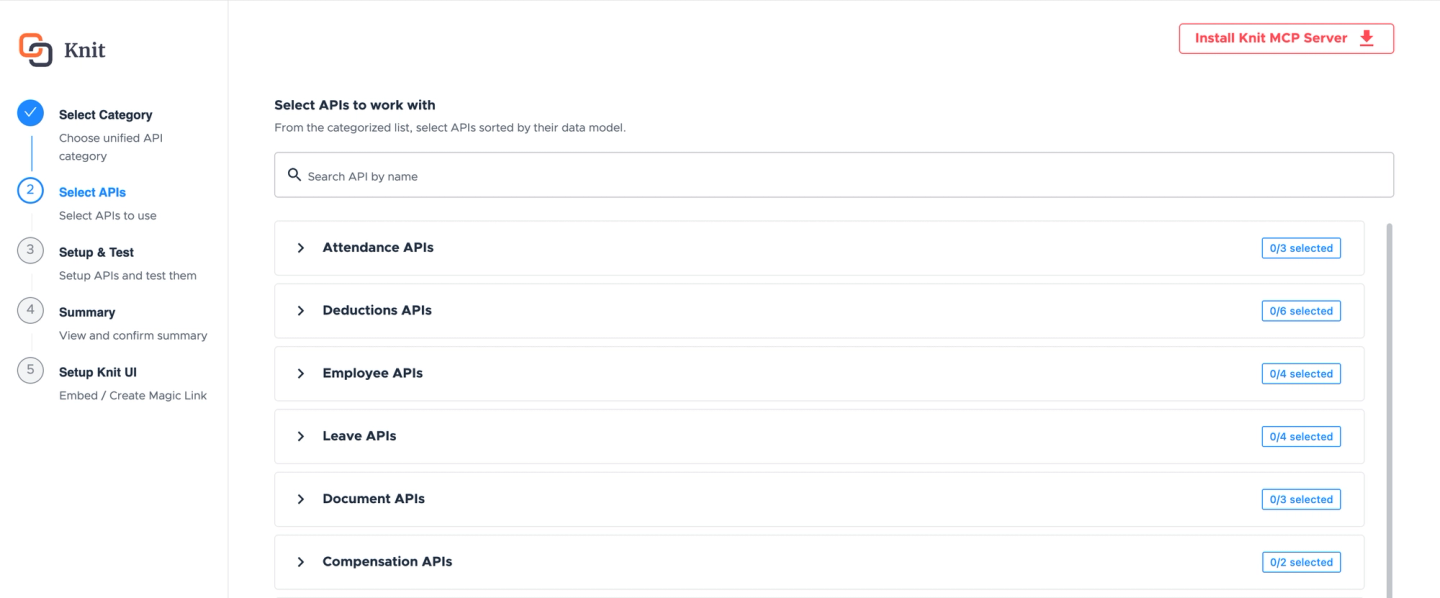
Knit is a managed unified API focused on HR, based in Bengaluru. It lists 175 apps across 13 categories, including 71 HRIS/payroll and 40 ATS apps. It stores no raw customer data and pushes change events to your webhook. MCP servers and an “Integrations Agent” are sold as separate products.
Best for
HR and recruiting SaaS in India, APAC or staffing that want a managed, no-storage HR model and can live with scheduled syncs.
Pros
- HR-first catalog with a strong APAC and staffing long tail: It covers Darwinbox, Keka, GreytHR, RazorpayX, Bullhorn, JobDiva and Vincere, plus Workday, ADP and UKG.
- Broad unified writes: You can create employees on 41 apps, update them on 37 and terminate them on 20, and create applications on 35 ATSs.
- No-storage design with certifications: Knit holds ISO 27001, SOC 2 and GDPR, with US, EU and India data residency.
- Managed change events: Syncs emit record.new, record.modified and record.deleted events, and flag records that disappear upstream.
Cons
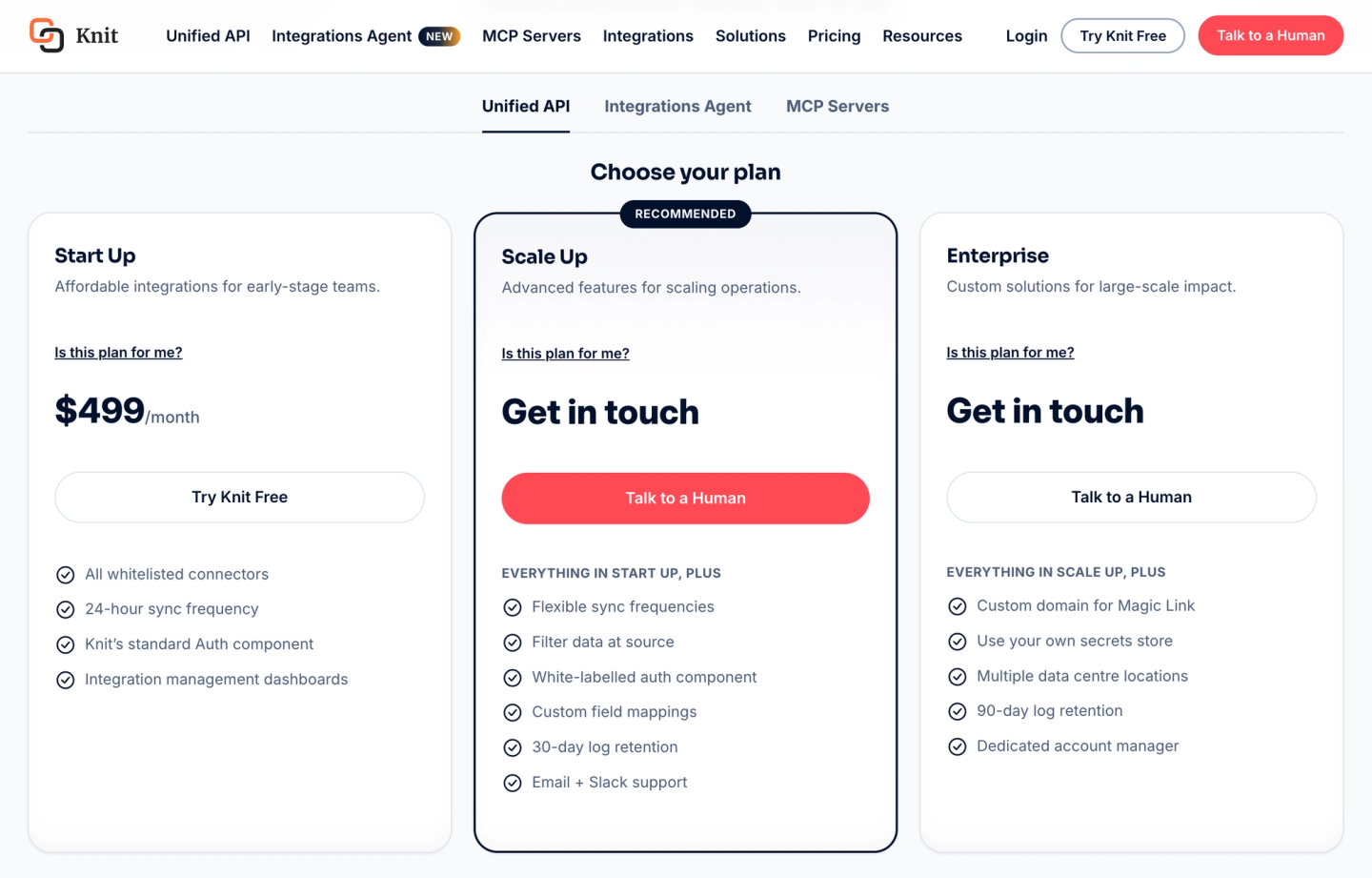
- HRIS changes arrive by polling, daily on the entry plan: Syncs default to every 24 hours, and that interval is fixed on the $499/month Start Up plan. Faster polling, down to 5 minutes, starts at Scale Up.
- Gaps where US payroll matters: Gusto and Justworks are missing. Get Employee Payroll covers 17 of 71 HRIS apps, and ADP Workforce Now and Paylocity are not among them. A new-integration SLA is Enterprise-only.
- Customization is dashboard config, gated by tier: Custom field mappings and custom objects require Scale Up, and unmapped fields aren’t sent in syncs. Passthrough returns the raw body as a string, and pagination is left to you.
- Managed-only, with HIPAA “readiness”: There is no self-hosted or BYOC option, and single tenant is Enterprise-only. The docs claim only HIPAA readiness, with no public BAA. That matters for health-adjacent benefits products.
- Agent tooling is a separate product and contract: MCP servers are priced separately from the Unified API. Embedded, multi-tenant auth for customer-facing agents requires MCP Enterprise, and the LangGraph SDK is in beta.
Side-by-side comparison table
The table compares all six platforms on the criteria above. On Finch vs Merge specifically, Finch goes deeper on US payroll and deduction writes. Merge covers both HRIS and ATS with a broader read model.
| Capability | Nango | Merge | Finch | Kombo | Apideck | Knit |
|---|---|---|---|---|---|---|
| Primary focus | Agents and SaaS products, across 1,000+ APIs | Unified API across 8 categories | US HRIS and payroll | People data (HRIS, ATS, LMS) | Accounting-first unified API | HR-first managed unified API |
| HRIS and payroll coverage | Yes (Workday, ADP, UKG, SuccessFactors, Oracle HCM, Gusto) | Yes (87, incl. 8 identity/file connectors) | Yes (265 providers, mostly assisted) | Yes (~100, strong in Europe) | Partial (~60; no payroll or time off on Workday, Rippling, UKG Pro) | Yes (71, strong in APAC) |
| ATS coverage | Yes (Greenhouse, Lever, Ashby, Workable) | Yes (63 ATS integrations) | No | Yes (~120 ATS connectors) | Partial (10; no Ashby or iCIMS) | Yes (40 ATS apps) |
| HR and ATS writes | Yes (create/update employees, submit time off, move candidates; any other write in code) | Partial (create employee, time off, timesheet) | No (deduction writes only) | Partial (broad ATS writes; employee updates in closed beta) | Partial (enterprise HCMs read-only) | Yes (create, update, terminate employees) |
| Payroll data and deduction writes | Partial (payroll tools not in catalog yet; build them via proxy or functions) | Partial (payroll runs, read-only) | Yes (pay statements and deduction write-back) | Partial (4 HCMs, read-only) | Partial (Gusto and Remote, read-only) | Partial (17 of 71 apps) |
| Fastest data freshness | Every 30 seconds, any plan, with webhooks | Daily on Launch; custom frequency on Professional+ | 24 hours automated, 7 days assisted | Served from Kombo's mirror; first sync can take hours | Live reads; HR webhooks polled every 24 hours by default | 24 hours on Start Up; down to 5 minutes from Scale Up |
| Custom fields and raw API access | Yes (models in code, proxy to any endpoint) | Partial (Professional/Enterprise only) | Partial (passthrough on Pro/Premier, ~13 providers) | Partial (custom fields on every plan; passthrough adds auth only) | Partial (field-level Data Scopes on Scale+) | Partial (custom fields on Scale Up+; raw passthrough) |
| Agent tools and MCP | Yes (pre-built HR tools, scoped Agent Sessions) | Partial (separate Agent Handler product, credit billing) | Partial (beta two-tool MCP, self-hosted) | No (docs-search MCP only) | Partial (hosted MCP; tenant isolation opt-in) | Partial (separate MCP product; multi-tenant needs MCP Enterprise) |
| Data storage and deployment | BYOC or self-managed (Enterprise) | Hosted in US, EU or APAC | Serves a stored copy | Full mirror; EU, US, CA regions; no BYOC | Pass-through; payloads logged by default | No storage; US, EU, India; no BYOC |
| Pricing and plan gating | Free for 10 connections, then from $50/month | $650/month for up to 10 accounts; key HR features on Professional+ | Self-serve Starter is read-only ($65/connection); Pro and Premier via sales | Demo-led, no public pricing; transforms Enterprise-only | From $599/month; HRIS plus ATS needs $1,299 Scale | From $499/month; faster syncs from Scale Up |
| Categories beyond HR | Yes (CRM, accounting, Slack, calendar and more) | Yes (8 categories) | No | Partial (LMS, assessments) | Yes (accounting-first) | Yes (13 categories) |
Catalog counts use each vendor’s own unit (integrations, providers, connectors, or apps) and are not directly comparable.
How to choose
- If you need HR, ATS, and payroll integrations alongside other APIs, for a product or an AI agent: pick Nango. One platform covers Workday, ADP, Gusto, Greenhouse, and 1,000+ other APIs, with scoped tools for agents.
- If you need per-customer custom fields, your own models, writes a common model doesn’t cover, or employee PII kept in your own cloud: pick Nango. You own the integration code and can call the provider’s raw API.
- If you want a vendor-maintained model for reading standard employee and candidate data, and a sales-led contract works for you: pick Merge.
- If you build US benefits, 401(k), or payroll-fintech products: pick Finch, as long as daily or weekly data is acceptable.
- If you sell HR-tech or AI recruiting into Europe and only need HR systems: pick Kombo.
- If you’re accounting-first and need basic employee data from SMB and European HR tools as a second category: pick Apideck.
- If your customers are in India, APAC, or staffing, and you want a managed, no-storage HR model with scheduled syncs: pick Knit.
FAQ
How do unified APIs handle custom fields in HRIS, ATS, and payroll data?
Most unified APIs map custom fields onto a fixed common model, often only on higher tiers. Merge puts custom fields and Field Mapping on Professional or Enterprise, and Knit requires Scale Up. Kombo lets customers map their own fields on every plan, but you can’t add models or endpoints. With Nango, integrations are TypeScript functions you own: you store each customer’s mappings in connection metadata and extend the model in code.
Can one unified API handle HR, ATS, CRM, and accounting integrations?
Yes, but check the depth in each category. Finch covers HR and payroll only, Kombo sticks to people data, and Apideck is accounting-first with thinner HR coverage. Merge spans 8 categories, with key HR features on Professional or Enterprise. Nango covers HRIS, ATS, and payroll next to CRM, accounting, and 1,000+ other APIs, with one auth flow, one sync model, and one bill.
What is the best payroll API for engineering teams?
It depends on whether payroll is your product or one input to it. If you build US benefits or 401(k) products that write deductions back to payroll, Finch is the specialist, as long as daily or weekly data is acceptable. If payroll is one of several systems your product or agent reads, Nango connects to ADP, Gusto, Paycom, UKG, and other payroll systems, and you can call any payroll endpoint through the proxy or a function. Syncs run as often as every 30 seconds on every plan.
Which unified API is best for AI agents that need HRIS, ATS, or payroll data?
Nango. About 300 HR, ATS, and hiring actions are live by default, such as submitting time off in Workday or moving candidates between stages in Lever. Agent Sessions limit each agent to one customer’s connections and an allowlist of tools, so an org-chart agent can’t read compensation. Merge and Knit sell agent tooling as separate products, and Kombo has no tool layer for agents.
Conclusion
Most unified APIs for HR serve one niche: US payroll, European HR, APAC, or reading standard data. Nango covers HRIS, ATS, and payroll next to 1,000+ other APIs. It gives agents scoped tools, and you can change any integration in code. Start with your hardest integration, often Workday or ADP, and test it end to end.
Start building with Nango for free.


