> ## Documentation Index
> Fetch the complete documentation index at: https://nango.dev/docs/llms.txt
> Use this file to discover all available pages before exploring further.
# AWS Multi-Service - How do I link my account?
# Overview
To authenticate with AWS Multi-Service, you will need:
1. **Access Key ID** - A unique identifier that specifies the IAM user or role making the request.
2. **Secret Access Key** - A confidential key used to sign API requests made to AWS services.
This guide will walk you through finding these credentials within AWS.
**Developer settings** — the AWS **Service** (e.g. `s3`, `athena`, `inspector2`) and **Region** (e.g. `us-east-1`) are configured by the developer when setting up the integration in Nango, not by the end user. Each integration targets a single service and region. End users only need to provide their Access Key ID and Secret Access Key.
### Prerequisites:
* You must have a registered account with AWS.
* The IAM user must have permissions for the AWS service targeted by this integration.
### Instructions:
#### Step 1: Finding your access keys
1. **Log in** to your AWS IAM console.
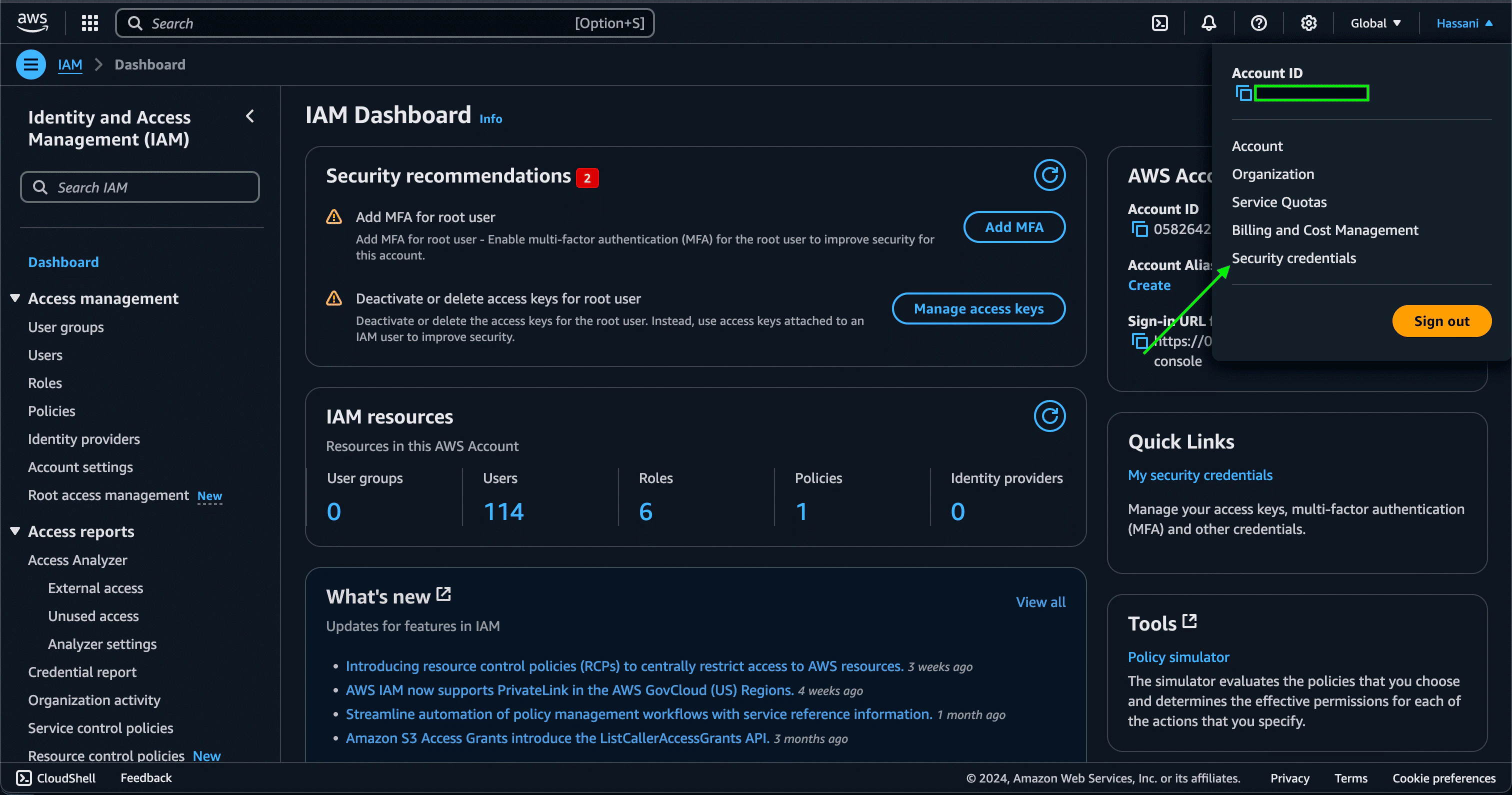
2. In the navigation bar on the upper right, select your user name, and then select **Security credentials**.
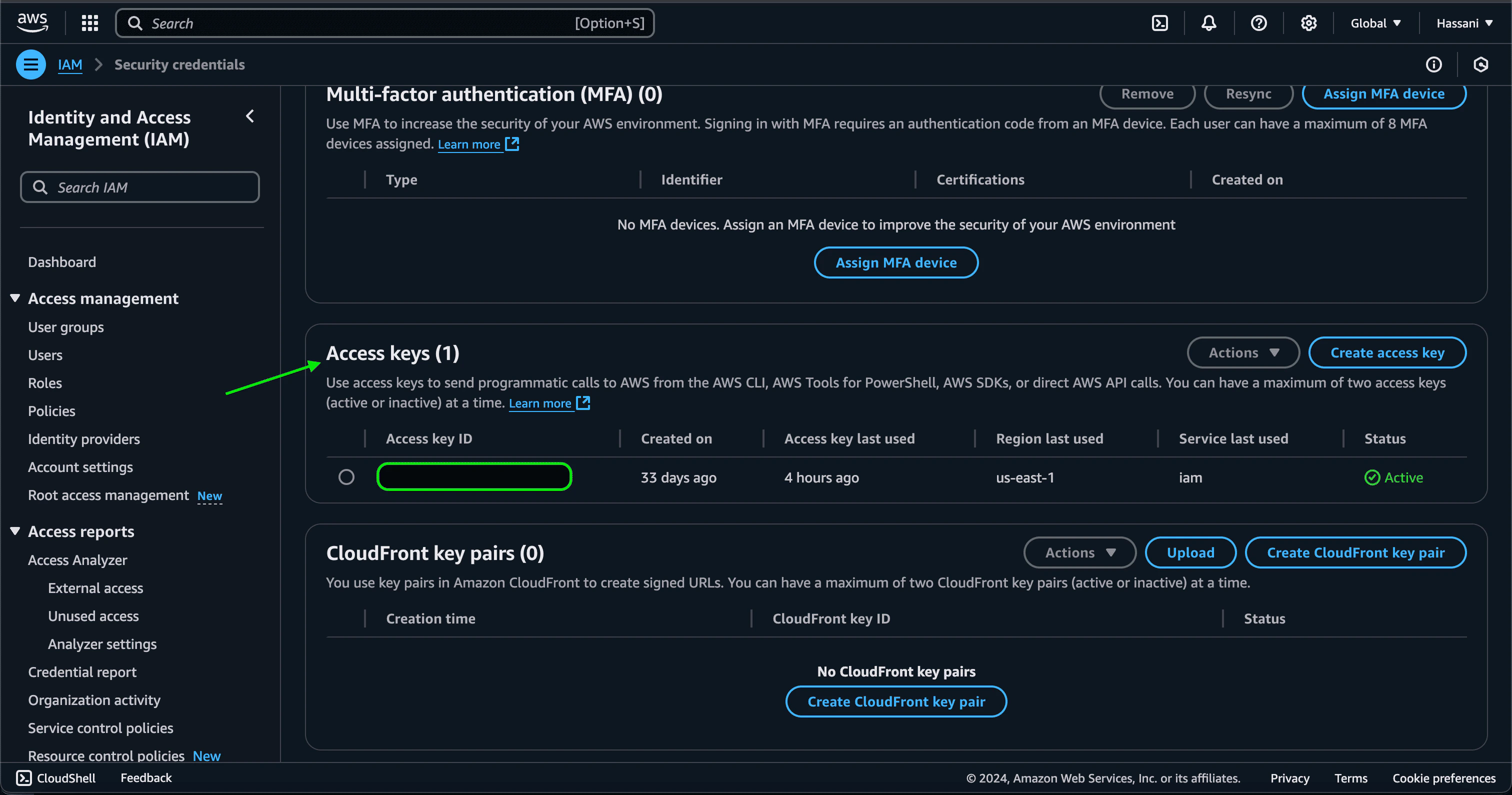
 3. In the **Access keys** section, click **Create access key**. If you already have two access keys, this button is deactivated and you must delete an access key before you can create a new one.
 4. On the **Access key best practices & alternatives** page, choose your use case to learn about additional options which can help you avoid creating a long-term access key. If you determine that your use case still requires an access key, click **Other** and then click **Next**.
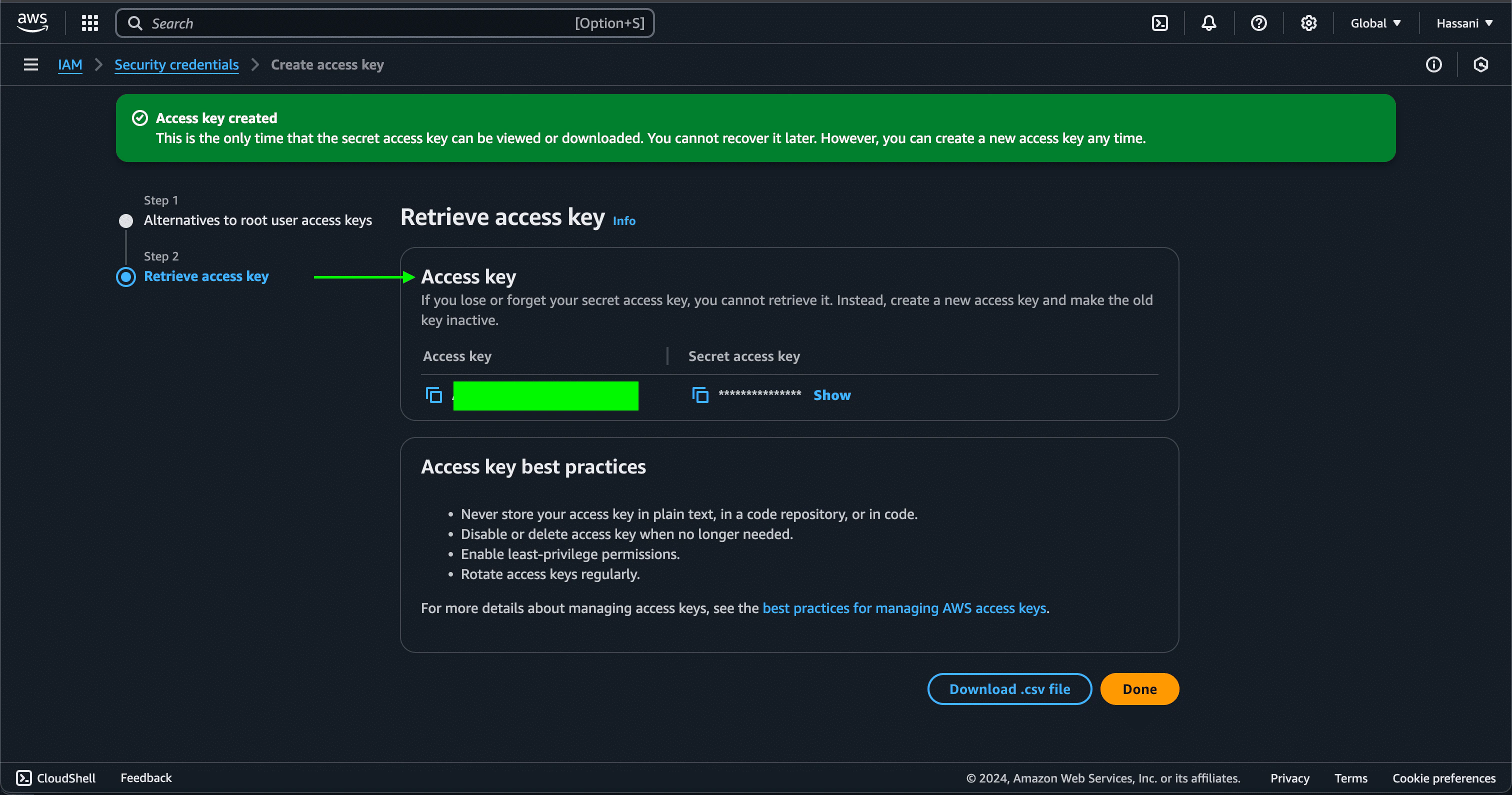
5. Once you are done, a pair of both **Access** and **Secret Access** keys will be generated.
4. On the **Access key best practices & alternatives** page, choose your use case to learn about additional options which can help you avoid creating a long-term access key. If you determine that your use case still requires an access key, click **Other** and then click **Next**.
5. Once you are done, a pair of both **Access** and **Secret Access** keys will be generated.
 #### Step 2: Enter credentials in the Connect UI
Once you have your keys:
1. Open the form where you need to authenticate with AWS.
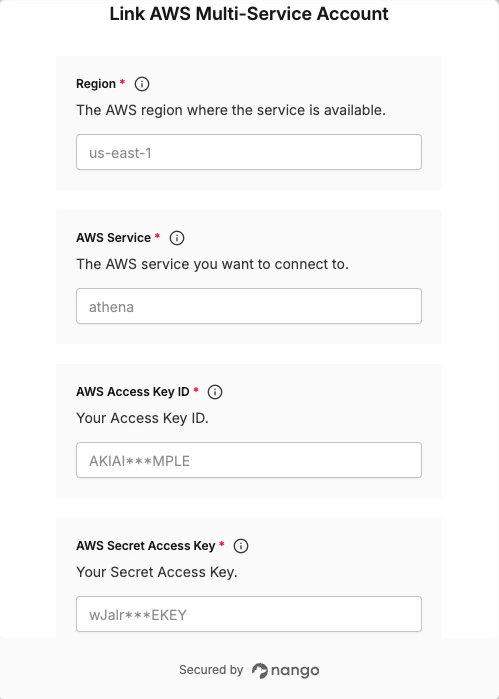
2. Enter the **Access Key ID** and **Secret Access Key** in their respective fields.
3. Submit the form, and you should be successfully authenticated.
#### Step 2: Enter credentials in the Connect UI
Once you have your keys:
1. Open the form where you need to authenticate with AWS.
2. Enter the **Access Key ID** and **Secret Access Key** in their respective fields.
3. Submit the form, and you should be successfully authenticated.
 You are now connected to AWS Multi-Service.